

Why Curated Pet Stores Matter: A 2026 Guide

Table of Contents
- Why Curated Pet Stores Matter for Modern Pet Owners
- How to Choose High-Quality Pet Supplies
- Independent vs Big Box Pet Stores: What's the Real Difference?
- Pet Store Product Safety Standards That Actually Protect Your Pet
- Why Curated Pet Stores Matter for Long-Term Pet Wellness
- The Hidden Costs of Cheap Pet Products
- What to Look for in a Curated Pet Store
- Frequently Asked Questions
Last Updated: September 11, 2026
Why Curated Pet Stores Matter for Modern Pet Owners
Walk into a big-box pet retailer and you'll face aisle after aisle of near-identical products, most of them made by a handful of mass-market brands. Curated pet stores exist as the answer to that problem. Instead of stocking everything, they stock what works, and that distinction shapes everything from ingredient sourcing to the advice you get at the counter. At Blanco's Pet Store, we offer a carefully curated selection of pet essentials, ranging from everyday necessities and engaging toys to specialized care products. We are dedicated to supporting pets and the people who love them by providing high-quality items that promote comfort, health, and joy. Whether you are looking for training tools, cozy bedding, or stylish accessories, our store is here to help you and your pet enjoy every moment together.
This guide explains why curated pet stores matter, how independent retailers differ from big box stores, and what to check before you spend money on anything for your pet.
How to Choose High-Quality Pet Supplies
Choosing high-quality pet supplies starts with reading the label, not the marketing on the front of the package. Look for a named manufacturer, a full ingredient or material list, and clear care instructions. If a product hides those details, that's your answer.
A few practical checks I'd run on anything before buying:
- Named ingredients or materials. "Chicken" beats "meat meal." "Untreated cotton" beats "soft fabric."
- A contactable manufacturer. A real company with a real address stands behind recalls and questions.
- Safety certifications where relevant. For chews and consumables, look for statements about testing and sourcing.
- Construction that matches the pet. A senior dog with arthritis needs different bedding support than a high-energy puppy.
- Return terms you can actually use. If your pet rejects it, you want a clear path back.
What most guides miss is that price and quality don't track as neatly as people assume. A cheap bed that flattens in a month costs more over a year than one that lasts. That math is the core of the case for curation.
Independent vs Big Box Pet Stores: What's the Real Difference?
The core difference is selection philosophy. Big box stores optimize for volume and shopping convenience: thousands of SKUs, low prices, and staff stretched across a huge floor. Independent retailers optimize for a curated selection, meaning fewer products chosen with more scrutiny.
That shows up in several ways:
- Inventory depth vs. breadth. A big box store carries twenty versions of the same toy. A curated shop carries two, and can tell you why.
- Staff knowledge. Independent stores tend to hire people who own and train the animals they sell for.
- Product vetting. Curated shops often drop products after customer feedback or a recall, while mass retailers may keep stocking until corporate acts.
- Personalized recommendations. You get a conversation, not a shelf number.
Big box stores win on shopping convenience and one-stop trips. Independent retailers win on consumer trust and expert guidance. Neither is wrong for every shopper, but they serve different needs.
| Factor | Big Box Store | Curated Independent Store |
|---|---|---|
| Selection | Thousands of SKUs | Fewer, vetted products |
| Staff expertise | General retail | Species and condition-specific |
| Pricing model | Volume discounts | Quality-focused |
| Product vetting | Corporate-driven | Owner and staff-driven |
| Best for | One-stop convenience | Specific needs, expert advice |
Pet Store Product Safety Standards That Actually Protect Your Pet
Product safety standards in pet retail are uneven, and that's exactly why curation matters. Some categories, like pet food and certain chews, fall under federal oversight through the FDA's animal and veterinary guidance. Others, like toys and bedding, see far less mandatory testing, which means the retailer's own vetting becomes your safety net.
A responsible store builds its own quality assurance process on top of whatever regulation exists. That typically includes asking suppliers for material disclosures, tracking product recalls, and pulling items when problems surface. If you're worried about BPA, phthalates, or chemical treatments, ask the store directly what testing a product has undergone. A curated shop should have an answer. A big box aisle rarely will.
Why Curated Pet Stores Matter for Long-Term Pet Wellness
Curated pet stores matter because product choices compound over an animal's lifetime, and the compounding runs through a few concrete mechanisms rather than a vague promise of "better health."
Nutritional consistency. A diet built on a stable formula with named ingredient sourcing keeps a pet's digestive system on a predictable input. Frequent formula changes, common when a retailer swaps suppliers to chase a lower wholesale price, are a well-known trigger for GI upset in dogs and cats (vcahospitals.com). Sticking with one vetted food and transitioning slowly can lead to fewer diet-related vet visits than frequently changing foods.
Structural support over time. Bedding, harnesses, and mobility aids either distribute a pet's weight correctly or they don't. A harness that rubs the same spot on every walk creates a chronic friction injury. A bed that bottoms out within months stops supporting arthritic joints, which is exactly when support matters most. These are slow-failure products, and slow failures are expensive because they surface as a condition rather than a defect.
Chew and toy safety. A toy that sheds material or a chew that fragments creates an obstruction risk. Veterinary practices regularly treat foreign-body ingestion, and the cost of that care is orders of magnitude higher than the price difference between a vetted chew and a bargain one (merckvetmanual.com). Curation is the retailer absorbing that risk analysis on your behalf.
The long-term health cost angle most guides skip
Here's the piece competitors leave out: the economics of pet wellness are back-loaded. The savings from a cheap product show up immediately at checkout. The costs show up months or years later as veterinary bills, and they are usually larger than the original savings by a wide margin.
Think of it as a substitution. Every dollar saved on a poorly made harness, a low-quality food, or a flimsy bed is a dollar of risk transferred to future-you. A curated store is essentially a filter that removes the products most likely to generate that future cost. You are not paying more for the same thing; you are paying now to avoid paying later, often at a multiple.
This is also where veterinary integration matters. The best curated shops don't try to replace your vet. They help you ask better questions and choose products that support whatever treatment or prevention plan your vet has set. Nutritional standards, sustainable sourcing, and supply chain transparency all feed into that.
When switching a senior or special-needs pet to new bedding or mobility aids, change one product at a time and give it two weeks. If something irritates their skin or changes their movement, you'll know exactly which item caused it.
The Hidden Costs of Cheap Pet Products
Cheap pet products carry costs that don't appear on the price tag. The obvious one is replacement: a flimsy toy destroyed in a week gets bought again, and again. The less obvious one is health. Inferior materials, inconsistent ingredients, and poor construction create problems that surface as vet bills.
But there's a third cost that almost no guide names, and it's the one that actually explains why curation works: the cognitive cost of too much choice.
The psychology of choice overload
When shoppers face dozens of near-identical options, they don't evaluate each one. They can't. Research on consumer decision-making has long shown that beyond a certain number of options, people stop comparing and start defaulting. The default is usually the cheapest item or the most heavily advertised one, not the best fit. That default is exactly what mass-market brands count on.
This is the mechanism behind a familiar experience: you walk into a big-box aisle intending to buy the right thing, and you walk out with the loudest package. The overload didn't make you lazy. It made the decision feel impossible, so your brain took the shortcut.
A curated selection removes the noise. When a store has already filtered the category down to a handful of vetted options, you can actually compare them on the criteria that matter, like ingredient sourcing, construction, and fit for your specific pet. Curation isn't about limiting your choice. It's about making your choice legible.
The replacement math, made concrete
Consider the pattern on a single item. A budget bed might need replacing several times a year. A well-made one might last several years. Even without quoting exact prices, the pattern is clear: the cheaper item usually costs more per year of use. That's the hidden cost, and it's the strongest argument for premium goods chosen with care.
The same logic applies to food. A lower-cost formula that a pet tolerates poorly generates its own costs: wasted bags, trial-and-error switching, and sometimes a vet visit to rule out a sensitivity. A vetted formula that the pet does well on eliminates that churn. The sticker price is only one line in the ledger.
Why this is the real case for curation
Put the two together, the psychology and the math, and the argument for curated pet stores stops being about taste or luxury. It becomes about decision quality. A curated store does the comparison work you would otherwise do badly under overload, and it filters out the products most likely to generate replacement costs and health costs down the line. You pay a little more up front for a decision you can actually stand behind.
What to Look for in a Curated Pet Store
A good curated pet store earns your trust through specifics, not slogans. Look for a store that can name its suppliers, explain why it dropped a product, and match recommendations to your pet's actual condition rather than a generic category.
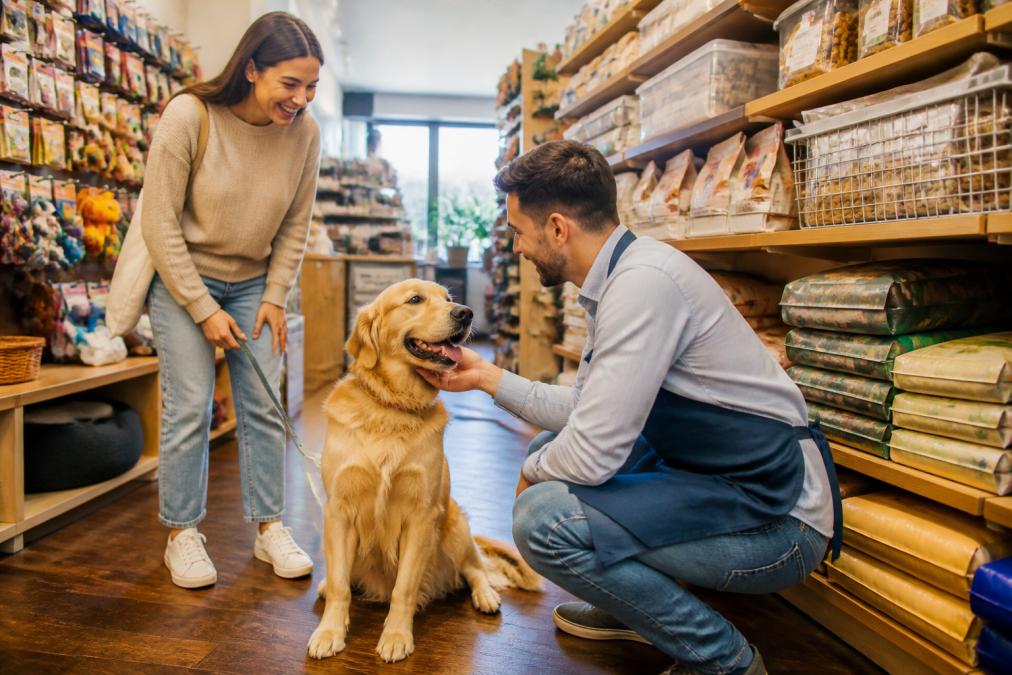
Here's a vetting checklist you can run on any store, online or in person:
- Can staff explain the ingredient sourcing behind a food or treat?
- Do they track product recalls and pull items proactively?
- Do they ask about your pet's age, condition, and temperament before recommending?
- Is there a clear, usable return policy if your pet rejects a product?
- Do they carry specialized items, like mobility aids or anxiety products, or only general supplies?
- Can they describe their sustainable sourcing or environmental practices?
- Do they offer loyalty programs or subscription options that reward repeat customers?
This is essentially an interactive vetting framework. Instead of judging a store by its size or its prices, you judge it by how well it answers these questions. A store that passes most of them is doing the work that mass-market brands skip.
That's the practical case for curation. It's not about being fancy. It's about a retailer taking responsibility for what lands on its shelves, so you don't have to research every product yourself.
Blanco's Pet Store offers a carefully curated selection of pet essentials, ranging from everyday necessities and engaging toys to specialized care products. We are dedicated to supporting pets and the people who love them by providing high-quality items that promote comfort, health, and joy. Whether you are looking for training tools, cozy bedding, or stylish accessories, our store is here to help you and your pet enjoy every moment together. If you want supplies that promote comfort, health, and joy, get started with Blanco's Pet Store and give your pet the quality they deserve.
Frequently Asked Questions
What are red flags in a pet store?
Watch for dusty shelves with expired products, staff who cannot explain ingredient sourcing, and aisles dominated by mass-market brands with no specialty options. A curated pet store should have transparent product vetting, knowledgeable staff, and a clear return policy. If a store cannot tell you where its food comes from or how it evaluates safety, that is a red flag worth taking seriously.
Why are curated pet stores often better than big-box retailers?
Curated pet stores select products based on ingredient sourcing, product vetting, and pet wellness outcomes rather than shelf space deals. That means fewer recalled items, more all-natural foods, and staff who offer personalized recommendations. Big box stores carry thousands of SKUs, which can lead to choice overload and inconsistent quality assurance across the inventory.
How does product curation impact pet health and safety?
Curated pet stores review nutritional standards, supply chain transparency, and product recalls before stocking an item. That vetting process reduces your pet's exposure to low-quality ingredients, unsafe materials, and products that fall apart quickly. Over time, better nutrition and safer gear can lower veterinary bills and improve pet health outcomes across every life stage.
What should I look for in a curated pet store?
Look for clear ingredient sourcing information, staff with training in pet wellness, a curated selection rather than endless aisles, and a return policy that works if your pet rejects a product. Ask how they vet products and whether they track recalls. A store that answers those questions directly is one you can trust with your pet's daily care.