

Signs of Arthritis in Senior Cats: Spot Them Early

Table of Contents
- 10 Early Signs of Arthritis in Senior Cats
- When to See a Vet for Cat Joint Pain
- Cat Arthritis Treatment Options Your Vet May Suggest
- How to Make a Home Comfortable for an Arthritic Cat
- A Quality of Life Checklist for Your Senior Cat
- Conclusion: Small Changes, Better Days
- Frequently Asked Questions
Why Arthritis in Senior Cats Is Easy to Miss
Feline arthritis, also known as osteoarthritis, is a degenerative joint disease that affects a large number of older cats, yet many pet parents never notice the early warning signs (peer-reviewed research). Cats are masters at hiding pain, a survival instinct that makes spotting the signs of arthritis in senior cats genuinely difficult. By the time most owners realize something is wrong, their cat has likely been uncomfortable for months.
This guide from Blanco's Pet Store walks you through the subtle cues, the treatment pathways, and the home changes that can meaningfully improve your cat's comfort. We believe that understanding what to look for is the first step toward helping happier, healthier pets through every stage of their journey.
The key to managing this condition is early detection. Unlike dogs, who may limp or whine, a cat with joint pain simply adapts. They stop jumping on the counter, sleep more, or become irritable when touched. Knowing the specific behavioral changes to watch for can make the difference between a cat silently suffering and one receiving the care they need.
10 Early Signs of Arthritis in Senior Cats
The signs of arthritis in senior cats are often mistaken for "just getting old." However, stiffness, reduced activity, and changes in temperament are not normal parts of aging; they are indicators of joint inflammation and chronic pain. Here are the ten most common signs to watch for:
- Reluctance to jump onto counters, beds, or furniture
- Hesitation or crying when using the litter box
- Reduced grooming, leading to a matted or unkempt coat
- Stiffness in the hind legs, especially after resting
- Irritability or hissing when touched or picked up
- Muscle atrophy, or visible loss of muscle mass in the back legs
- Inappropriate elimination, such as urinating outside the litter box
- Changes in sleeping patterns, often sleeping more or hiding
- Decreased interest in playing or interacting with family
- Gait abnormalities, such as a subtle limp or a "bunny hopping" walk
Mobility Changes You Might Notice First
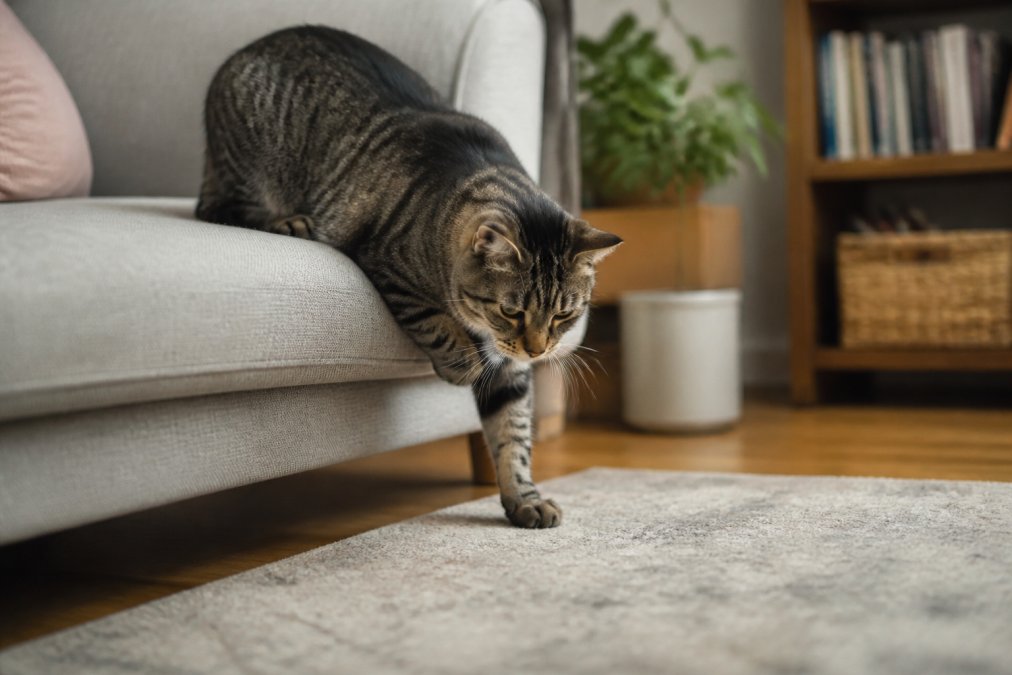
The earliest and most telling signs of arthritis in senior cats usually involve movement. You might notice your cat no longer greets you at the door because the jump down from the cat tree is too painful. They may also have trouble navigating stairs or miss their landing when jumping, which is a sign of decreased range of motion and muscle weakness.
A common mistake is attributing these mobility issues to laziness. If your once-active cat now spends all day on the floor instead of their favorite high perch, it is likely a physical limitation, not a personality change. Pay close attention to how they walk; a slight stiffness in their gait that disappears after a few minutes of movement is a classic symptom of osteoarthritis.
Behavioral Shifts That Signal Joint Pain
Pain changes behavior. A cat suffering from joint pain may become more reclusive, hiding in quiet corners to avoid being disturbed. You might also see a breakdown in grooming habits. If reaching their back to groom is painful, they will stop doing it, which leads to dandruff and matted fur.
Litter box aversion is another significant red flag. If the box has high sides, entering it can be painful for a cat with arthritis. They may begin eliminating just outside the box because it is easier than stepping in. This is not a behavioral problem; it is a pain management problem. If you notice this change, the first step is to see a vet to rule out joint pain before assuming a behavioral issue.
When to See a Vet for Cat Joint Pain
You should schedule a veterinary appointment as soon as you notice any of these behavioral or mobility changes. Early intervention can slow the progression of the disease and keep your cat comfortable for longer. Your vet will perform an orthopedic examination, checking for joint swelling, pain on flexion, and reduced range of motion in the limbs.
Diagnosis often involves radiographs, or X-rays, to confirm the extent of the joint damage and rule out other causes of the symptoms (vcahospitals.com). While there is no cure for degenerative joint disease, a veterinary diagnosis is the essential first step in creating a pain management plan. Do not attempt to treat your cat with human anti-inflammatory medication, as many are toxic to felines. Always consult a professional for guidance on safe pain relief options.
Cat Arthritis Treatment Options Your Vet May Suggest
Once diagnosed, there are several cat arthritis treatment options available, and vets typically recommend a multimodal approach rather than a single fix. This often combines medical management with lifestyle changes to address both the inflammation and the physical strain on the joints.
Common veterinary recommendations include:
- Anti-inflammatory medication: Prescription drugs (NSAIDs) that reduce joint inflammation and provide pain relief.
- Joint supplements: Nutraceuticals containing glucosamine and chondroitin to support cartilage health.
- Pain management injections: Therapies that lubricate joints or block pain signals.
- Weight management: A structured diet to reduce excess weight, which lessens the load on painful joints.
- Physical therapy: Gentle, controlled exercises to maintain muscle mass and flexibility.
Veterinary guidance is critical here. According to guidelines from the American Association of Feline Practitioners, a tailored plan that includes environmental modification is often more effective than medication alone. The goal is to manage the chronic pain while maintaining your cat's quality of life.
How to Make a Home Comfortable for an Arthritic Cat
Making your home more accessible is one of the most effective ways to support a cat with arthritis. The goal is to reduce the physical effort required to access resources. This means providing warm, soft bedding on the floor, as well as elevated beds near windows so they can still enjoy a view without jumping.
You should also consider the placement of food, water, and litter boxes. Keep them on a single level of the home to prevent unnecessary stair climbing. Providing a litter box with low sides is crucial for cats who struggle to step over high edges. Simple adjustments like these can dramatically reduce your cat's daily pain and frustration.
Simple DIY Modifications That Work
You do not need expensive equipment to help your cat. Several practical, low-cost modifications can be made around the house immediately.
- Ramps: Build or buy a gentle ramp to help your cat reach their favorite couch or bed instead of jumping.
- Step Stools: Place small, sturdy steps near high-traffic areas like the bed or window sill to break up the jump into smaller, less painful increments.
- Heated Beds: A self-warming or microwavable cat bed can soothe stiff joints and provide relief from the cold.
- Litter Box: Swap a high-sided box for a shallow tray or cut a low entrance into a plastic storage bin.
- Food and Water: Elevate the bowls slightly so your cat does not have to bend down as far, reducing strain on the neck and back.
These types of environmental enrichment and accessibility aids are a cornerstone of senior cat care. They give your cat their independence back without requiring painful movements.
A Quality of Life Checklist for Your Senior Cat
Assessing how well your cat is coping with arthritis requires more than just observing their mobility. It involves a holistic look at their daily habits and happiness. Use this checklist to track their condition and discuss it with your vet at follow-up appointments.
| Assessment Area | Signs of Comfort | Signs of Discomfort |
|---|---|---|
| Mobility | Jumps onto low surfaces, walks without stiffness | Hesitates to jump, limps after resting |
| Grooming | Coat is clean and free of mats | Fur is greasy, matted, or has dandruff |
| Appetite | Eats normally and maintains weight | Shows disinterest in food or loses weight |
| Social Behavior | Seeks out family, purrs when petted | Hides, hisses, or avoids interaction |
| Litter Box Use | Uses the box consistently | Has accidents outside the box |
If you notice your cat slipping into the "discomfort" column on several items, it is time to revisit your pain management strategy with your vet. Tracking these details helps you make informed decisions about their care, ensuring that their golden years are as comfortable and dignified as possible.
A Practical Pain Score Card You Can Use at Home
The table above is a useful snapshot, but it does not capture the day-to-day fluctuations that matter for treatment decisions. Most veterinary pain specialists recommend a simple scoring system that owners can use weekly to spot trends. Here is a practical version adapted from the Feline Musculoskeletal Pain Index (FMPI), a validated tool developed by researchers at the University of Montreal.
How to use it: Every Sunday evening, score your cat from 0 to 4 on each of the six questions below. A score of 0 means "not at all" or "never," and 4 means "very much" or "always." Total the scores and keep a running log.
| Question | 0 | 1 | 2 | 3 | 4 |
|---|---|---|---|---|---|
| Over the past week, how much difficulty does your cat have jumping up onto a surface they used to reach easily? | |||||
| How stiff does your cat appear after waking from a nap? | |||||
| How reluctant is your cat to play or chase a toy? | |||||
| How much does your cat groom their back or hindquarters? (Reverse score: 0 = grooms normally, 4 = has stopped grooming) | |||||
| How often does your cat miss the litter box or have accidents? | |||||
| How irritable or withdrawn is your cat when you approach or pet them? |
Interpreting the score:
- 0 to 6: Your cat is likely managing well. Continue your current routine and re-score monthly.
- 7 to 14: Moderate discomfort is likely. Discuss any upward trend with your vet.
- 15 to 24: Significant pain is probable. A veterinary recheck is warranted, and you should discuss adjusting the pain management plan. If the score has risen sharply over 2 to 3 weeks, do not wait for the next scheduled appointment.
Conclusion: Small Changes, Better Days
Recognizing the signs of arthritis in senior cats early allows you to make small, meaningful changes that can significantly improve their quality of life. From adjusting your home layout to exploring treatment options with your vet, every step you take helps ease their chronic pain and restore their comfort.
At Blanco's Pet Store, we are dedicated to supporting pets and the people who love them by providing high-quality items that promote comfort and health. Whether you need orthopedic bedding, low-entry litter boxes, or gentle grooming tools to help with a matted coat, we have a carefully curated selection of pet essentials to help your senior cat enjoy their home again. Shop our range of senior care products today and give your cat the comfort they deserve.
Frequently Asked Questions
At what age do cats typically develop arthritis?
Most cats show early signs of arthritis in senior cats starting around age 7 to 10, though the condition is common in cats over 12. Radiographs often reveal joint changes even when symptoms are subtle. Because cats are experts at hiding pain, many owners miss the gradual onset. If your cat is entering these years, watch for small shifts in jumping, grooming, or sleeping habits. Early detection gives you more options for managing discomfort and slowing progression.
What can I do for my senior cat with arthritis at home?
Start by making your home more comfortable for an arthritic cat. Place extra litter boxes on one level, add ramps to favorite furniture, and use shallow, wide food bowls. Heated beds and soft, thick bedding ease joint stiffness. Keep nails trimmed short so walking is less painful. These changes, combined with cat arthritis treatment options from your vet, help your cat maintain independence and comfort.
How can I tell if my cat is in pain from arthritis?
Cats rarely cry out from joint pain. Instead, look for behavioral changes: reluctance to jump, stiff gait, reduced grooming, or irritability when touched. Inappropriate elimination is a common sign because climbing into a litter box hurts. If your cat sleeps more and plays less, pain may be the cause. Use a quality of life checklist to track these changes and share them with your vet to guide treatment.
What is the life expectancy of a cat with arthritis?
Arthritis itself does not shorten a cat's lifespan. It is a degenerative joint disease, not a terminal illness. What matters is maintaining quality of life through pain management, weight control, and home modifications. Cats diagnosed early and treated well can live comfortably for years. When to see a vet for cat joint pain is important: prompt care helps preserve mobility and keeps your cat happy through its senior years.