

Non Toxic Chew Toys for Puppies: 2026 Safe Picks

Table of Contents
- Quick Comparison: Top Non Toxic Chew Toys for Puppies
- 1. KONG Puppy Natural Rubber Teething Toy: Best for Sore Gums
- 2. West Paw Zogoflex Toys: Best for Eco-Conscious Owners
- 3. Mammoth Cotton Rope Toy: Best for Dental Health
- 4. Benebone Wishbone: Best for Long-Lasting Engagement
- 5. The Kind Pet Organic Cotton Toys: Best for Gentle Chewers
- 6. Only Natural Pet Hemp Toys: Best Natural Fiber Option
- 7. Earth Rated Chew Toys: Best for Mental Enrichment
- How to Identify Toxic Chemicals in Dog Toys
- Durability for Aggressive Chewers
- Toys Made in the USA and Manufacturing Standards
- Disposal and Environmental Impact
- Frequently Asked Questions
Last Updated: September 15, 2026
Quick Comparison: Top Non Toxic Chew Toys for Puppies
Non toxic chew toys for puppies are products made without BPA, phthalates, or synthetic chemicals that can leach into a dog's system during chewing. Puppies explore the world mouth-first, and their developing bodies are more vulnerable to chemical exposure than adult dogs. The right chew toy can mean the difference between healthy teething and an expensive vet visit.
The options below range from natural rubber to organic cotton. For puppies in the teething stage, KONG's natural rubber formula remains the veterinary standard. For eco-conscious owners, West Paw's Zogoflex line offers recyclable, dishwasher-safe construction.
| Toy | Material | Starting Price | Best For | Durability |
|---|---|---|---|---|
| KONG Puppy | Natural rubber | $8.99 | Sore gums | High |
| West Paw Zogoflex | Zogoflex (BPA-free) | $15.95 | Eco-conscious owners | Very high |
| Mammoth Cotton Rope | 100% cotton | $7.50 | Dental health | Moderate |
| Benebone Wishbone | Nylon composite | $12.00 | Long engagement | Very high |
| The Kind Pet | Organic cotton/hemp | $14.00 | Gentle chewers | Low-moderate |
| Only Natural Pet Hemp | Hemp fiber | $12.99 | Natural fiber fans | Moderate |
| Earth Rated | BPA-free rubber | $10.99 | Mental enrichment | High |
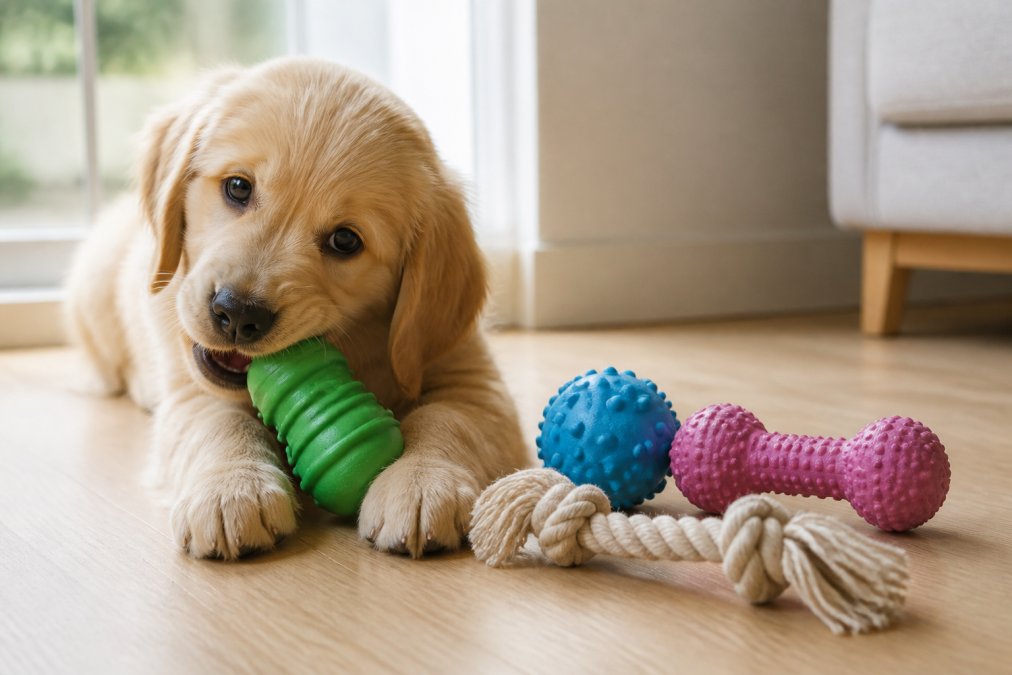
1. KONG Puppy Natural Rubber Teething Toy: Best for Sore Gums
KONG's puppy-specific rubber is softer than the adult Classic line, which matters more than most owners realize. Adult KONG rubber can be too firm for a puppy's deciduous teeth, potentially causing discomfort rather than relief.
The stuffable center accepts treats or peanut butter, turning a simple chew into an enrichment session. According to the American Veterinary Medical Association's pet toy safety guidance, supervised chew sessions with appropriately sized toys reduce ingestion incidents.
Pros: Vet-recommended, soothes sore gums, stuffable for enrichment. Cons: Requires regular cleaning to prevent treat buildup.
2. West Paw Zogoflex Toys: Best for Eco-Conscious Owners
West Paw manufactures Zogoflex toys using a proprietary material that is BPA-free, phthalate-free, and latex-free. The company's Join the Loop program accepts worn toys back for recycling into new products.
This is the pick for owners who want durable dog toys for aggressive chewers without the environmental guilt. The Zogoflex material holds up to determined chewing while remaining soft enough for puppy mouths.
Pros: Dishwasher safe, recyclable, extremely durable. Cons: Higher price point than basic rubber options.
3. Mammoth Cotton Rope Toy: Best for Dental Health
Cotton rope toys work like dental floss, with fibers massaging gums and dislodging plaque as puppies chew. Mammoth uses 100% natural cotton with no synthetic dyes.
The caveat: rope toys aren't appropriate for heavy chewers who might swallow long strands. Supervised play is essential, and you should discard the toy once it begins unraveling significantly.
Pros: Natural materials, promotes dental hygiene, affordable. Cons: Not suitable for aggressive chewers.
4. Benebone Wishbone: Best for Long-Lasting Engagement
Benebone's ergonomic wishbone shape lets puppies grip with their paws while chewing, and the real bacon, chicken, or peanut flavor keeps them interested longer than unflavored alternatives. The company manufactures in the USA.
One honest limitation: the nylon composite is harder than rubber, so it may be too tough for very young puppies still working through their first teeth.
Pros: Real flavor infusion, easy paw grip, made in the USA. Cons: Too hard for very young puppies.
5. The Kind Pet Organic Cotton Toys: Best for Gentle Chewers
The Kind Pet builds toys from organic cotton, hemp, and wool with zero synthetic dyes or plastics. The soft texture suits puppies who prefer plush toys over rubber.
Durability is the tradeoff. These toys won't survive an aggressive chewer, but for gentle pups, they offer a completely non-toxic option that biodegrades at end of life.
Pros: Plastic-free, biodegradable, hypoallergenic. Cons: Less durable than rubber.
6. Only Natural Pet Hemp Toys: Best Natural Fiber Option
Hemp fibers are naturally antimicrobial and more durable than cotton, making them a strong middle ground between soft plush and hard rubber. Only Natural Pet sources hemp without artificial colors or toxins.
The selection of shapes is narrower than rubber competitors, but for puppies who enjoy natural fiber textures, hemp offers excellent chew resistance for moderate chewers.
Pros: Naturally antimicrobial, durable, safe if small pieces are ingested. Cons: Limited shape variety.
7. Earth Rated Chew Toys: Best for Mental Enrichment
Earth Rated's BPA-free rubber toys feature treat-dispensing cavities that turn chewing into problem-solving. The textured surface also helps clean teeth during play.
The dispensing cavity can be tricky to clean thoroughly, so plan on a bottle brush. For puppies needing mental stimulation, the enrichment value outweighs the maintenance.
Pros: Excellent enrichment, safe non-toxic rubber, textured for dental health. Cons: Difficult to clean inside cavity.
How to Identify Toxic Chemicals in Dog Toys
Checking labels for "BPA-free" and "phthalate-free" is a start, but it's not enough. Those claims are marketing terms, not regulated certifications. Phthalates often hide behind the generic term "fragrance" or "plasticizer" on ingredient lists, and "non-toxic" on a package has no legal definition for pet products the way it does for some children's goods.
The chemicals to screen for
- Phthalates, used to soften PVC into flexible plastic. Look for "PVC," "vinyl," or "#3" in the recycling triangle. Repeated exposure is associated with endocrine disruption in developing animals.
- BPA (bisphenol A), a hardening agent in polycarbonate plastics, sometimes marked "PC" or "#7." Puppies are more vulnerable because their livers and kidneys are still maturing.
- Lead and heavy metals, most often found in painted surfaces and in cheap metal squeakers or clips. Paint that flakes is the highest-risk form.
- Formaldehyde and azo dyes, common in low-cost dyed fabrics and some imported ropes. Natural, undyed fiber avoids the question entirely.
- Melamine and unidentified "composite" plastics, a catch-all term that tells you nothing about what's actually in the toy.
How to read a safety claim like a skeptic
A useful benchmark is the framework used for children's products. The U.S. Consumer Product Safety Commission's guidance on children's product safety sets screening standards for the same chemicals puppies mouth constantly, so a toy that meets a recognized toy-safety standard is starting from a stronger position than one that simply says "non-toxic."
When you see a certification or standard referenced, check three things:
- Which standard? ASTM F963 is the widely cited toy-safety standard covering material composition and small-part hazards. A manufacturer that names it is telling you what was tested.
- Which lab? A third-party lab (not the factory's own quality team) is the meaningful signal. "Tested in-house" is weaker than "tested by an independent lab."
- Which materials? The label should name the base material, natural rubber, food-grade nylon, organic cotton, hemp, not just the absence of one chemical.
A five-minute in-store test
- Smell it. A strong chemical or plastic odor out of the package is a red flag, not a shipping smell.
- Press it. Soft plastics that dent easily with a fingernail are more likely to shed fragments a puppy can swallow.
- Flex it. Natural rubber flexes and returns; cheap plastic cracks or whitens at the bend.
- Read the fine print. If the packaging doesn't name the specific materials used, assume it contains unspecified plastics.
Why this matters more for puppies than adult dogs
A puppy's body weight is a fraction of an adult's, so the same dose of a leaching chemical is proportionally larger.
Durability for Aggressive Chewers
Match the toy to the puppy's stage, not just its bite
The three traits that actually predict durability
Reading the failure signs before they become a vet visit
When to size up
Toys Made in the USA and Manufacturing Standards
Disposal and Environmental Impact
Frequently Asked Questions
What is the safest chew toy for puppies?
The safest chew toys for puppies are made from non-toxic, durable materials like natural rubber or organic cotton. Look for toys labeled BPA-free and phthalate-free. Natural rubber toys from brands like KONG or West Paw are vet-recommended because they are soft enough for puppy teeth but tough enough to withstand chewing. Always supervise play and replace toys that show signs of wear.
How can I tell if a dog toy is non-toxic?
Check the label for terms like BPA-free, phthalate-free, and non-toxic. Look for toys made from natural rubber, organic cotton, hemp, or wool. Avoid toys with strong chemical smells or synthetic dyes. Reputable brands often list safety certifications or testing standards. If the packaging does not specify materials, it is best to choose a different toy.
Are rubber chew toys safe for puppies?
Yes, rubber chew toys can be safe for puppies if they are made from non-toxic, puppy-specific formulas. Natural rubber toys are designed to be softer for teething gums while still durable. Avoid hard plastic or synthetic rubber toys that can splinter. Always choose the correct size for your puppy to prevent choking hazards.
What do vets recommend for puppies to chew?
Veterinarians often recommend natural rubber toys, rope toys made from cotton, and durable chew toys that are free from chemicals. They also suggest supervising your puppy during chew sessions and avoiding toys that are too hard, as these can damage teeth. For aggressive chewers, look for toys specifically rated for durability.
Puppy-proofing your home means nothing if the toys you hand over contain the same chemicals you're trying to avoid. Blanco's Pet Store curates every chew toy with material transparency in mind, from natural rubber to organic fibers. Our selection includes specialized care products and training tools designed to support your puppy through every developmental stage. Shop now and give your puppy a safer start.