

Is BPA Free Plastic Safe for Pets?

Table of Contents
- What Is BPA Free Plastic and Why Pet Owners Care
- The Truth About BPA Free Plastic Safety for Pets
- Understanding Plastic Resin Codes and Food Grade Standards
- Dangers of Phthalates in Pet Toys
- Safest Plastic for Dog Toys and Pet Bowls
- Durable Dog Toys for Aggressive Chewers
- Beyond Plastic: Safer Material Alternatives for Pets
- How to Identify and Avoid Unsafe Pet Products
- Frequently Asked Questions
Last Updated: September 20, 2026
What Is BPA Free Plastic and Why Pet Owners Care
BPA free plastic refers to products manufactured without bisphenol A, a chemical compound historically used in polycarbonate plastics and epoxy resins. For pet owners, understanding whether is BPA free plastic safe for pets, and what it doesn't guarantee, is crucial to making informed decisions about toys, bowls, and water containers your animals use daily.
Manufacturers often replace BPA with alternative chemicals like bisphenol S (BPS) or phthalates, creating a false sense of security. The absence of one harmful chemical doesn't guarantee safety, your pet may still be exposed to other endocrine disruptors that leach into food and water.
The real question, is BPA free plastic safe for pets, isn't just whether a product lacks BPA, but whether replacement chemicals are safer and whether the plastic remains stable under pet use conditions: heat, saliva, chewing, and thermal degradation.
This guide breaks down what BPA free actually means, what replaces BPA in these products, and most importantly, which plastics genuinely offer your pets the safest long-term use.
The Truth About BPA Free Plastic Safety for Pets
Does BPA free mean completely safe?
No. BPA-free plastic is not automatically safe. Other chemicals in the plastic may still migrate into your pet's food or water.
Manufacturers substitute BPA with chemically similar compounds like BPS or phthalates, which carry their own health concerns. Plastic polymers like PET degrade over time, especially when exposed to heat, sunlight, or aggressive chewing.
Pet owners often assume "BPA-free" means FDA-approved safety, but the FDA allows BPA-free alternatives without rigorous testing. Manufacturers can switch to replacement chemicals with minimal regulatory scrutiny.
What chemicals replace BPA in BPA free products?
The most common BPA replacements include bisphenol S (BPS), bisphenol F (BPF), and various phthalates. These chemicals function similarly to BPA in hardening plastic, but they carry comparable concerns about endocrine disruption.
Bisphenol S (BPS) is marketed as safer but behaves like BPA in the body, binding to hormone receptors and disrupting thyroid function, reproductive health, and metabolism in pets.
Phthalates are plasticizers that make rigid plastics flexible and are known endocrine disruptors (the EPA). They leach into food and water, especially when heated or exposed to fatty substances like pet food oils or saliva.
Antimony, used as a catalyst in PET production, can migrate into food and water with thermal degradation. Accumulation poses long-term risks, especially for senior pets or those with compromised immune systems.
Understanding Plastic Resin Codes and Food Grade Standards
Plastic products carry resin identification codes, numbers 1 through 7 printed inside triangles on the bottom of containers. These codes indicate the type of plastic and, to some extent, its safety profile for food and water contact.
Type 1 (PET) is the most common plastic for beverage bottles and pet food containers. Though FDA food-grade, it degrades over time and leaches antimony when exposed to heat or UV light, making it a moderate concern for repeated pet use.
Type 2 (HDPE) is more chemically stable than PET and less prone to leaching, making it better for long-term pet use.
Type 3 (PVC) requires phthalates for flexibility, which readily leach into saliva and food. Avoid entirely for pet toys, especially for aggressive chewers.
Type 5 (PP) is polypropylene, more heat-stable than PET and less likely to leach harmful compounds. It's the safest plastic option for repeated pet contact.
Type 7 (Other) includes polycarbonate and mixed plastics. Even BPA-free polycarbonates may contain BPS or similar replacements.
FDA "food-grade" approval applies to single-use or short-term contact. Pet bowls filled daily for years, water dishes left in the sun, and toys subjected to constant chewing accelerate chemical migration far beyond food-grade standards.
Dangers of Phthalates in Pet Toys
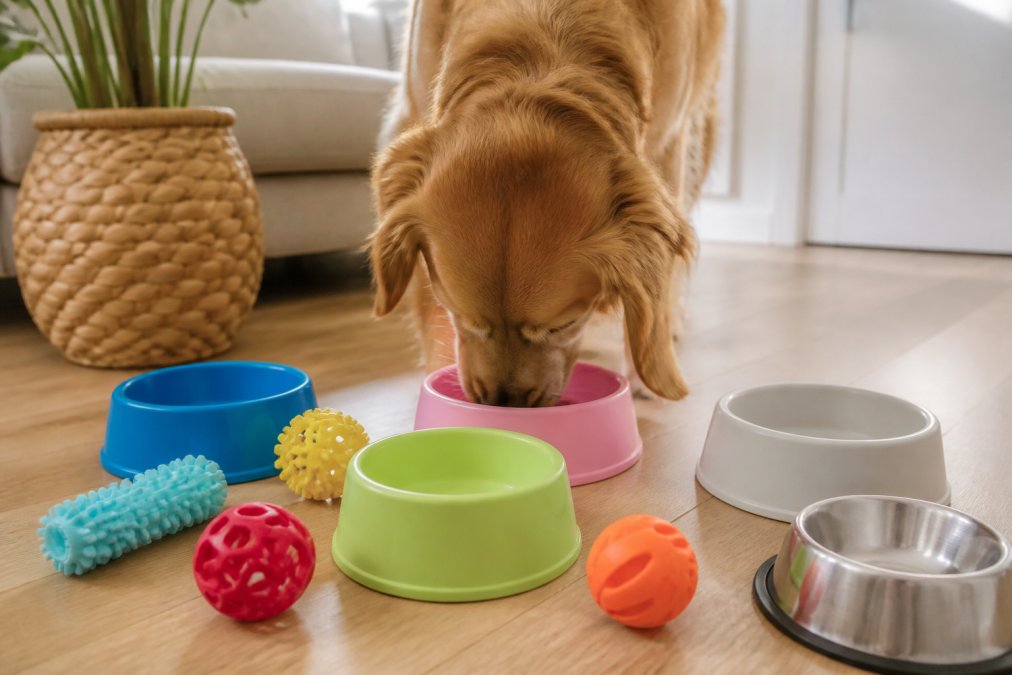
Phthalates are among the most concerning chemicals in pet products. These plasticizers make rigid plastics flexible, allowing manufacturers to produce toys with varied textures and durability. However, phthalates are classified as endocrine-disrupting chemicals (EDCs) that interfere with hormone regulation in mammals.
When dogs chew phthalate-containing toys, the chemical migrates into saliva and is ingested. Over weeks and months, phthalates accumulate in fatty tissues and organs, including the liver and kidneys.
Phthalate exposure causes reproductive dysfunction, thyroid imbalance, immune suppression, and metabolic disruption (pubmed.ncbi.nlm.nih.gov). Senior pets and those with existing health conditions face compounded risk.
Phthalates are often not listed on labels. The only reliable way to avoid them is to select toys made from natural rubber, untreated wood, or food-grade silicone.
Aggressive chewers face the highest risk. Dogs that shred plastic toys increase surface area for chemical leaching and ingest microplastics along with phthalates, creating dual exposure pathways.
Safest Plastic for Dog Toys and Pet Bowls
When plastic is necessary, polypropylene (Type 5) offers the best safety profile among conventional plastics. It resists thermal degradation, requires fewer chemical additives, and leaches fewer harmful compounds than PET or PVC. Polypropylene toys and bowls are more durable and less prone to breaking down under aggressive chewing or repeated heating.
High-density polyethylene (Type 2) is the second choice for plastic bowls. Replace annually to minimize accumulated chemical migration.
For items in constant contact with food and water, material choice is far more important than BPA-free labeling.
Avoid leaving plastic bowls or toys in direct sunlight, filling with hot water or food, or microwaving containers. These precautions reduce thermal degradation and chemical migration.
For aggressive chewers, plastic toys present inherent risks. Shredding creates microplastics that pose gastrointestinal risks, even in BPA-free, phthalate-free plastics.
Durable Dog Toys for Aggressive Chewers
Durable dog toys for aggressive chewers must balance durability with safety. The most aggressive chewers will eventually destroy any toy, but the goal is to extend the toy's lifespan long enough to minimize chemical exposure and microplastic ingestion.
Natural rubber toys are significantly more durable than plastic alternatives. Rubber resists puncture and shredding better than PET or polypropylene, and natural rubber doesn't contain the synthetic additives present in plastic toys. Rubber toys do wear down over time, but they fragment into larger pieces that are easier to monitor and remove before your dog ingests them.
Silicone toys offer another durable option. Food-grade silicone is chemically inert and doesn't leach harmful compounds. Silicone toys withstand aggressive chewing better than many plastics and are easier to clean. The main limitation is cost, silicone toys are more expensive than plastic alternatives, but the safety benefit justifies the investment for dogs that chew destructively.
Rope toys and braided fabric toys appeal to many dogs, but they carry different risks. Dogs that unravel and ingest rope fibers face intestinal blockage, a serious medical emergency. Rope toys are safest for supervised play only, not for unsupervised chewing.
Kong-style toys made from rubber compounds are specifically engineered for aggressive chewers. These toys are designed to withstand intense chewing while remaining safe for ingestion in small fragments. The rubber composition doesn't contain phthalates or BPA, making them a reliable choice for dogs that destroy softer plastic toys within days.
The key principle: durable doesn't mean indestructible. The goal is to select toys that last long enough to minimize chemical exposure, but that fragment into safe pieces if your dog does destroy them. Avoid toys that splinter into sharp fragments or that break into pieces small enough to cause choking hazards.
Beyond Plastic: Safer Material Alternatives for Pets
The safest approach is to move beyond plastic entirely. Natural materials avoid the chemical complexity of synthetic polymers while offering superior durability and biocompatibility.
Natural rubber is harvested from rubber trees and requires minimal processing. It contains no synthetic additives, phthalates, or BPA. Natural rubber toys are durable, safe to ingest in small fragments, and don't degrade into microplastics. They're ideal for dogs of all ages and chewing styles.
Food-grade silicone is chemically inert and doesn't leach harmful compounds under any condition, heat, saliva, or prolonged contact.
How to Identify and Avoid Unsafe Pet Products
Reading labels is essential, but it's insufficient. Manufacturers use vague language like "BPA-free" and "non-toxic" without disclosing what chemicals the product actually contains. Here's how to move beyond marketing claims.
Frequently Asked Questions
What are the safest plastics for pets?
The safest plastics for pets are food-grade PET (polyethylene terephthalate) marked with a #1 resin code and high-density polyethylene (HDPE) marked with a #2 code. These materials have lower rates of chemical leaching and are less likely to release endocrine-disrupting chemicals. Always look for products labeled as food-grade and BPA free, though BPA free alone doesn't guarantee complete safety. Avoid plastics with #3 (PVC), #6 (polystyrene), and #7 (other) codes, as these are more prone to leaching harmful substances.
Is BPA free plastic still toxic for pets?
BPA free plastic can still pose risks to pets. While manufacturers remove bisphenol A, they often replace it with similar chemicals like bisphenol S (BPS) or bisphenol F (BPF), which function as endocrine disruptors in much the same way. Additionally, phthalates and antimony can leach from BPA free plastics, especially when exposed to heat, sunlight, or repeated chewing. The safest approach is to choose food-grade plastics and monitor bowls and toys for signs of wear or degradation.
What should I look for when buying plastic pet toys?
When selecting plastic pet toys, check the resin identification code, choose #1 (PET) or #2 (HDPE) plastics. Look for products labeled food-grade and BPA free. Inspect toys regularly for cracks, splintering, or signs of thermal degradation, as damaged plastics are more likely to shed microplastics and release chemicals. For aggressive chewers, prioritize durable, heavy-duty plastics or consider non-plastic alternatives like natural rubber or nylon. Avoid toys with strong chemical odors, which may indicate poor manufacturing or harmful off-gassing.
Are there safer alternatives to plastic for pet bowls and toys?
Yes, several materials are safer than plastic for pets. Stainless steel bowls are non-toxic, durable, and resistant to bacterial biofilm growth. Ceramic and glass bowls are also excellent options if unglazed or glazed with food-safe materials. For toys, natural rubber, untreated wood, and rope toys offer safer alternatives, though they require regular inspection for wear. Some pet owners also choose silicone toys, though silicone quality varies, ensure any silicone product is food-grade and free of harmful additives before offering it to pets.