

How to Transition Pets to New Gear: A Step-by-Step Guide

Table of Contents
- Why Gradual Transition to New Pet Gear Matters
- Pet Gear Acclimation Timeline: What to Expect
- Creating a Safe Zone for Your Pet
- Positive Reinforcement Training for Pets with New Equipment
- Signs of Pet Anxiety with New Equipment
- Age-Specific Transition Protocols
- Troubleshooting Behavioral Regressions
- Frequently Asked Questions
Last Updated: September 21, 2026
Why Gradual Transition to New Pet Gear Matters
Introducing new gear to your pet isn't just about slapping on a harness and hoping for the best. A rushed transition creates stress, anxiety, and behavioral problems that can last weeks or even months. The right approach spreads the adjustment across days, building positive associations step by step.
When you transition pets to new gear gradually, you're working with your pet's natural learning process. Pets need time to understand that the harness, collar, or crate isn't a threat. They need to experience it in calm, rewarding situations before you ask them to use it during walks or outings.
The difference between a rushed introduction and a thoughtful one shapes whether a pet accepts new equipment or resists it for months. The timeline matters. The consistency matters. Most importantly, the positive associations matter.
This guide walks you through exactly how to transition pets to new gear safely and effectively, with proven steps for different ages and situations.
Pet Gear Acclimation Timeline: What to Expect
The process of pet gear acclimation typically unfolds over 7-10 days, though some pets move faster and others need more time. This timeline gives your pet's nervous system time to adjust while building trust in the new equipment.
Days 1-3: Introduction and Familiarization
Your first goal is simple: let your pet see and smell the new gear without any pressure. Leave it on the floor near their safe zone or bed. Let them investigate it on their own terms.
During these early days, your pet is learning that the gear exists and isn't dangerous. They're gathering sensory information. Don't try to put it on yet. Just let them get comfortable with its presence.
- Place the gear in a space where your pet spends time
- Let them sniff and investigate without interference
- Stay calm and neutral, your relaxed energy helps them relax
- Reward curiosity with treats or praise when they approach it
By day three, most pets will have lost their initial wariness. They'll walk past it without concern or show casual interest.
Days 4-7: Building Comfort and Association
Now you're creating positive associations. Put the gear on for short periods while doing something rewarding, playtime, treats, or their favorite activity.
For harnesses: put it on for 2-3 minutes while giving treats or playing indoors. Take it off before your pet gets uncomfortable. Repeat this several times a day if possible.
For crates: toss treats inside, leave the door open, and let them explore. Feed meals inside with the door open. Gradually close the door for a few seconds while they eat.
For collars or other gear: put it on during calm, positive moments. Keep sessions under 5 minutes.
The key is ending on a positive note before your pet shows stress. This builds the belief that the gear means good things happen.
Days 8-10: Active Use and Consistency
By the second week, your pet has experienced the gear many times in positive contexts. Now you can introduce mild activity while wearing it.
For harnesses: take short walks in a quiet space. Start with 5-10 minutes. Keep the leash loose and rewarding.
For crates: close the door for longer periods while you're nearby. Leave it closed during calm activities like eating or resting.
For collars or other gear: wear it during regular activities, playtime, training, or quiet time at home.
Consistency is critical at this stage. Use the gear regularly so your pet doesn't forget the positive association. Gaps in use can reset progress, especially for anxious pets.
Creating a Safe Zone for Your Pet
A safe zone is a space where your pet can retreat when wearing new gear feels overwhelming. It's their anchor point during the acclimation process.
Your pet's safe zone should be:
- A quiet, familiar space (bedroom corner, crate, or bed)
- Away from household chaos and high traffic
- Stocked with comfort items (favorite toys, blankets, or chews)
- A place they already feel secure
When introducing new gear, let your pet spend time in this space wearing it. They'll learn that the gear is okay because they're in a place where they feel safe. Over time, they'll generalize that comfort to other environments.
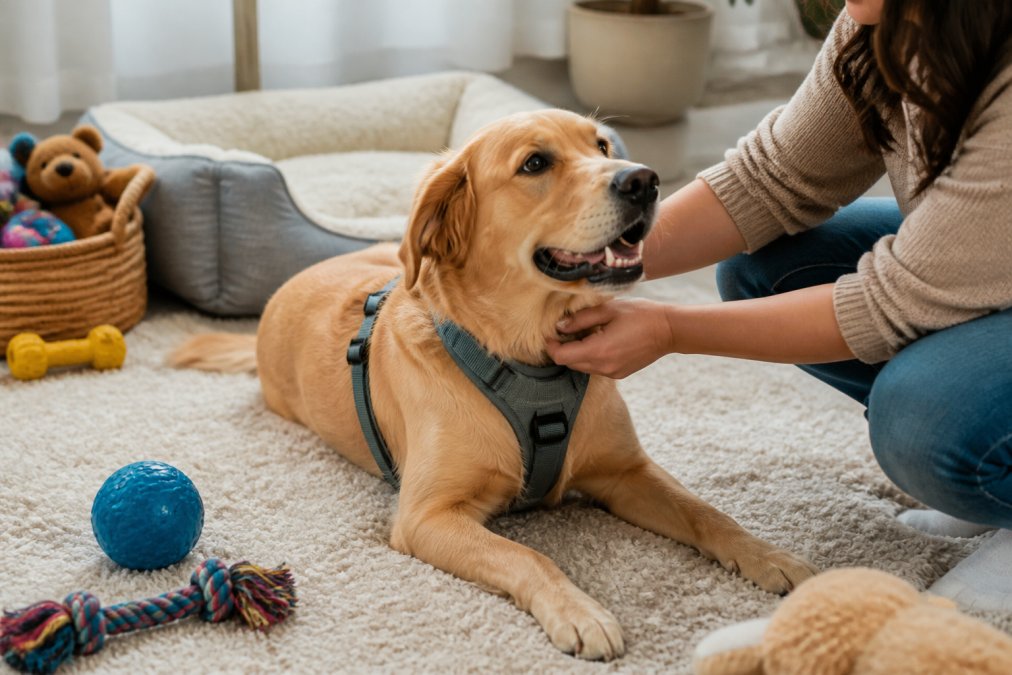
If your pet shows stress while wearing the gear, bring them to their safe zone. Don't force interaction or activity. Let them decompress.
Positive Reinforcement Training for Pets with New Equipment
Positive reinforcement is the foundation of successful gear transitions. It means rewarding the behavior you want to see more of.
Rewards that work:
- High-value treats (small pieces of chicken, cheese, or special treats)
- Enthusiastic praise ("Good dog!" with genuine excitement)
- Play or access to favorite toys
- Extra attention from you
Signs of Pet Anxiety with New Equipment
Learning to recognize anxiety signals helps you adjust your timeline. If your pet is showing stress, slow down. You're moving too fast, and pushing forward will create lasting resistance.
Common anxiety signs:
- Panting or rapid breathing
- Trembling or shaking
- Excessive drooling
- Refusing to move or freezing
- Whining, barking, or vocalization
- Trying to escape or pull away from the gear
- Loss of appetite
- Avoiding you or the gear
- Excessive licking or scratching at the gear
Age-Specific Transition Protocols
Different life stages require different approaches. A senior dog's needs differ from a high-energy puppy's.
Transitioning Senior Pets to Mobility Aids
Senior pets may need new gear for health reasons: a harness to support weak hind legs, a mobility sling, or a special collar. They're often already dealing with pain or discomfort, so patience is essential.
Steps for seniors:
- Extend the introduction phase to 4-5 days if your pet shows anxiety
- Use extra-soft, comfortable gear that doesn't add pressure to sore joints
- Keep sessions very short (2-3 minutes) to avoid fatigue
- Reward heavily, seniors often appreciate calm praise over play
- Introduce gear during their most alert, comfortable times of day
- Consider consulting your veterinarian about anxiety medication if your senior pet shows severe stress
Introducing Gear to Young and High-Energy Pets
Young pets have more energy and sometimes less patience. They may try to chew, shake, or remove new gear. This isn't defiance, it's how they explore.
High-energy pets need:
- More frequent short sessions rather than fewer long ones
- Physical activity before gear introduction (a tired pet is calmer)
- Extra-durable gear that can handle chewing or rough play
- Increased reward frequency because they get distracted easily
- Clear, consistent rules (gear stays on during walks, comes off after)
Troubleshooting Behavioral Regressions
Sometimes a pet who was doing well suddenly resists the gear again. This is a behavioral regression, and it's more common than you'd think.
Causes of regression:
- A scary experience while wearing the gear (loud noise, startling event)
- A gap in routine (you stopped using the gear for a few days)
- A change in environment (moving, new household member, schedule shift)
- Pain or discomfort (the gear rubbed wrong, or a new physical issue developed)
- Anxiety spike from an unrelated stressor
| Transition Phase | Timeline | Key Focus | Success Signal |
|---|---|---|---|
| Introduction | Days 1-3 | Let pet see and smell gear | Pet shows curiosity without fear |
| Building Association | Days 4-7 | Pair gear with rewards | Pet approaches gear willingly |
| Active Use | Days 8-10 | Use gear during activities | Pet wears gear without stress |
| Maintenance | Ongoing | Consistent, regular use | Gear becomes part of routine |
Frequently Asked Questions
How long does it take for a pet to get comfortable with new equipment?
Most pets need 7-10 days to acclimate to new gear when introduced gradually. The pet gear acclimation timeline depends on your pet's age, temperament, and past experiences. Younger pets often adapt faster, while senior pets or those with anxiety may need closer to 10 days. Consistency matters more than speed, rushing the process can cause setbacks that extend the timeline.
What are the best signs that my pet is stressed by new gear?
Common signs of pet anxiety with new equipment include excessive panting, trembling, avoidance, whining, loss of appetite, or reluctance to move. Some pets may also display behavioral cues like pulling away, hiding, or refusing treats. If your pet shows these stress signals, slow down the introduction process. Return to a previous step in the acclimation timeline and spend more time building positive associations before moving forward.
Should I use treats when introducing new pet gear?
Yes. Treats are essential for positive reinforcement training for pets. Pair new gear with high-value rewards your pet loves, small pieces of chicken, cheese, or special training treats work well. This creates positive associations and makes the gear feel like a predictor of good things. Reward your pet for simply being near the gear at first, then for touching it, and finally for wearing it. This gradual reward schedule speeds up acclimation significantly.
What should I do if my pet regresses after accepting new gear?
Behavioral regressions are common and usually temporary. They may occur due to stress, changes in routine, or negative experiences during use. Return to an earlier step in your transition timeline where your pet felt confident. Rebuild positive associations slowly, use extra treats and praise, and keep initial wearing sessions very short. If regressions persist beyond a few days or your pet shows signs of injury, consult your veterinarian to rule out physical discomfort.