

How to Keep Senior Dogs Active: 7 Steps

Table of Contents
- Understanding Your Senior Dog's Changing Needs
- Low-Impact Exercises for Senior Dogs
- Recognizing Signs of Arthritis in Senior Dogs
- Mental Enrichment for Aging Dogs
- Home Modifications and Mobility Support
- Nutrition and Weight Management for Active Seniors
- Regular Veterinary Care and Pain Management
- Creating a Daily Routine That Keeps Your Senior Dog Active
- Frequently Asked Questions
Last Updated: September 24, 2026
Understanding Your Senior Dog's Changing Needs
As your dog ages, their body changes. Energy levels drop. Joints become stiffer. Recovery takes longer. But the ability to keep senior dogs active remains one of the most important things you can do for their health and happiness.
The challenge isn't convincing your senior dog to move, it's choosing the right kinds of movement. High-impact exercise that worked at age three will cause pain at age twelve. Your job is to match activity to their current abilities while preventing injury.
The dogs who stay most engaged in their later years aren't the ones pushed hardest. They're the ones whose routines adapt to what their bodies can handle.
Low-Impact Exercises for Senior Dogs
Low-impact exercise keeps your senior dog moving without stressing aging joints. These activities build muscle, maintain flexibility, and support cardiovascular health, all without the wear and tear of running or jumping.
The goal isn't exhaustion. It's consistency. A 15-minute walk five times a week beats a single long hike that leaves your dog sore for days.
Gentle Walks on Familiar Routes
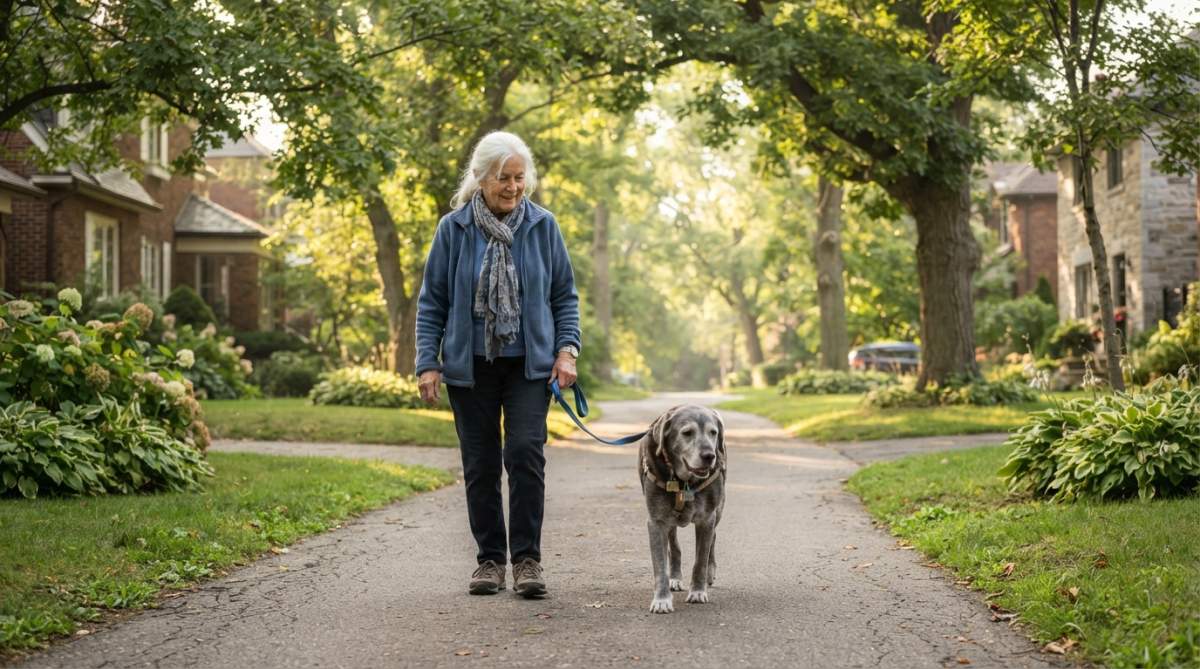
Short, regular walks are the foundation to keep senior dogs active. Aim for 15-30 minutes per session, depending on your dog's fitness level and mobility.
Choose familiar routes. Your dog knows the terrain. They don't have to navigate unexpected obstacles or steep hills. Predictability reduces stress and injury risk.
Walk during cooler parts of the day. Senior dogs overheat easily. Early morning or evening walks are safer than midday heat.
Watch your dog's pace. If they're limping, panting heavily, or lagging behind, it's time to turn back. Pain signals mean you've gone too far.
Swimming and Hydrotherapy
Water is one of the best environments for senior dogs. It supports their weight, reducing stress on joints. Movement in water builds strength without impact.
Not every dog loves swimming. Start slowly. A shallow wading pool or dog-friendly beach lets them adjust at their own pace. Even five minutes in water counts.
If your area has a canine hydrotherapy facility, ask about their senior dog programs. Professionals guide movement in warm water, which also eases stiffness.
Indoor Exercise for Bad Weather
Bad weather shouldn't stop your senior dog's routine. Indoor activities keep them moving when outdoor walks aren't possible.
Try these options:
- Short hallway walks at a slow pace
- Gentle tug-of-war with a soft rope toy
- Slow-motion fetch in a large room
- Stair climbing (one flight at a time, with rest breaks)
- Dancing or moving alongside your dog while playing music
The point is consistency. Your senior dog's routine matters more than the specific activity.
Recognizing Signs of Arthritis in Senior Dogs
Arthritis develops slowly. Many owners miss early warning signs because changes happen gradually.
Watch for these indicators:
- Stiffness after sleep or rest (especially in the morning)
- Reluctance to jump on furniture or into vehicles
- Limping or favoring one leg
- Difficulty rising from a lying position
- Reluctance to climb stairs or walk downhill
- Reduced interest in play or walks
- Swelling around joints
- Behavioral changes like irritability or withdrawn behavior
Pain changes how dogs act. A dog who once greeted you at the door might now stay on their bed. That's not laziness, that's pain management.
If you notice these signs, schedule a veterinary wellness exam. Early detection and management make a real difference in your dog's quality of life.
Mental Enrichment for Aging Dogs
Physical exercise matters, but mental stimulation is equally important. A bored senior dog deteriorates faster than one who stays mentally engaged.
Cognitive enrichment prevents decline. It keeps neural pathways active. It gives your dog purpose and engagement.
Puzzle Toys and Interactive Games
Puzzle toys force your dog to problem-solve. They work at their own pace. No speed or strength required, just thinking.
Rotate toys weekly. Novelty keeps engagement high. A puzzle toy they've seen for months becomes invisible. Swap it out and suddenly it's fascinating again.
Sniff games are perfect for seniors. Hide treats around the house or yard. Let your dog use their nose to find them. This taps into natural hunting instincts without physical strain.
Cognitive Enrichment and Socialization
Senior dogs benefit from interaction with other dogs and people. Socialization prevents cognitive decline and reduces anxiety.
Short, calm playdates with other senior dogs work well. Avoid chaotic situations with high-energy youngsters. Your senior dog needs gentle, predictable social time.
Training also stimulates the mind. Teach new commands or refresh old ones. Keep sessions short, five to ten minutes. Reward heavily. Make it fun, not frustrating.
Home Modifications and Mobility Support
Your home environment directly impacts your senior dog's ability to move safely and independently. Strategic modifications reduce injury risk and preserve mobility longer.
Choosing the Right Mobility Aids
Mobility aids extend your senior dog's independence and reduce strain on aging joints. The right choice depends on your dog's specific limitations.
Harnesses and slings provide support without restricting movement. A well-fitted harness distributes weight evenly across the chest and shoulders, reducing stress on arthritic joints. Slings (also called mobility slings or lift harnesses) support the rear legs or entire hindquarters, ideal for dogs with hind-leg weakness or mobility loss. Look for harnesses with padded panels and adjustable straps to prevent rubbing. Measure your dog's girth and length before purchasing, improper fit causes chafing and reduces effectiveness.
Ramps and stairs eliminate jumping, which stresses joints and can cause falls. Ramps work best for dogs with mild to moderate mobility loss; stairs suit dogs who can still navigate steps but need lower heights. Ramps should have a gentle slope (no steeper than 1 inch of rise per 4 inches of length) and non-slip surfaces. Portable ramps let you adapt to different furniture heights. Stairs with treads 8-10 inches deep and 6-8 inches tall are easier for senior dogs to navigate than standard human stairs.
Orthopedic beds reduce pressure on joints during rest, which comprises 16-18 hours of a senior dog's day. Memory foam or gel-infused beds conform to your dog's body, distributing weight evenly. Elevated beds improve air circulation and make rising easier for dogs with arthritis. Waterproof covers simplify cleaning for incontinent seniors. Bed size matters, your dog should stretch out fully without curling into a ball, which indicates the bed is too small.
Grip aids prevent slipping on hard floors, a major fall risk.
Home Layout Modifications
Beyond equipment, how you arrange your home matters. Keep your senior dog's bed, food, water, and outdoor access on the same level to minimize stair climbing. If stairs are unavoidable, install a baby gate to prevent your dog from attempting them unsupervised. Remove throw rugs that bunch or slide, creating tripping hazards. Ensure lighting is adequate, especially in hallways and near stairs, senior dogs have declining vision and need to see obstacles clearly.
Monitoring Fit and Effectiveness
After introducing a mobility aid, observe your dog for two weeks. Are they using it? Do they move more confidently? Is there any rubbing, limping, or behavioral change? Adjust fit as needed. Harnesses and slings should allow two fingers of space between the material and your dog's skin. If your dog avoids a mobility aid, consult your veterinarian, improper fit or discomfort may be the issue.
Nutrition and Weight Management for Active Seniors
Extra weight stresses aging joints. A senior dog carrying excess pounds works harder just to move.
Regular Veterinary Care and Pain Management
Preventative care is crucial for senior dogs. Wellness exams catch problems early when they're most treatable.
Creating a Daily Routine That Keeps Your Senior Dog Active
Consistency matters more than intensity. A predictable routine helps your senior dog know what to expect. It reduces anxiety and supports better movement.
Structure your day around activity:
- Morning: Short walk or gentle exercise before breakfast
- Mid-day: Mental enrichment (puzzle toys, sniff games)
- Afternoon: Rest and recovery
- Evening: Another short walk or indoor activity
- Before bed: Calm interaction and relaxation
Frequently Asked Questions
How much exercise does a senior dog actually need?
Senior dogs typically need 30 minutes to 1 hour of low-impact exercise daily, broken into shorter sessions. The exact amount depends on your dog's age, health status, and fitness level. Start with shorter walks and gradually increase duration based on how your dog responds. Watch for signs of fatigue or limping, which indicate you should reduce intensity. Your veterinarian can recommend a specific exercise plan tailored to your senior dog's orthopedic health and overall condition.
What are the best signs of arthritis in senior dogs that limit activity?
Common signs include stiffness after rest, reluctance to climb stairs or jump, limping or favoring one leg, and swelling around joints. You may notice your dog moving more slowly or showing pain when touched in certain areas. Some seniors resist exercise they once enjoyed or have difficulty rising from lying down. If you spot these signs, consult your veterinarian about pain management options and modified activities that maintain quality of life without causing discomfort.
Can puzzle toys and interactive games really keep aging dogs mentally active?
Yes. Puzzle toys and interactive games provide cognitive enrichment that combats mental decline in senior dogs, including cognitive dysfunction syndrome. These activities stimulate problem-solving and keep your dog engaged without requiring physical exertion. Rotate toys regularly to maintain interest, and choose puzzles matched to your dog's dexterity level. Even 10-15 minutes daily of mental enrichment can improve alertness, reduce anxiety, and enhance overall quality of life in aging dogs.
Should you walk a 14-year-old dog if they seem reluctant?
Yes, but adjust the approach. Gentle, short walks on familiar routes remain important for maintaining muscle tone, joint flexibility, and mental stimulation even in very senior dogs. If your dog is reluctant, reduce distance and pace, allow frequent rest breaks, and choose times when they seem most energetic. Pain or stiffness may be the reason for reluctance, so consult your veterinarian to rule out arthritis or other conditions. Shorter, more frequent walks often work better than one longer outing for very elderly dogs.
Keeping your senior dog active requires the right tools and mindset. Blanco's Pet Store provides orthopedic bedding, mobility ramps, puzzle toys, and specialized care products designed specifically for aging dogs. Shop our curated selection of senior dog essentials and help your companion stay active, comfortable, and engaged through every stage of their life.