

How to Entertain High Energy Cats: 7 Proven Strategies

Table of Contents
- Understanding High Energy in Cats
- Best Interactive Cat Toys for Active Play
- How Long to Play With Your Cat Daily
- Creating an Enriched Indoor Environment
- How to Calm an Anxious Cat Through Play
- Clicker Training and Trick Training for Mental Engagement
- DIY Enrichment Projects and Budget-Friendly Ideas
- Common Mistakes to Avoid When Entertaining High Energy Cats
- Frequently Asked Questions
Last Updated: September 23, 2026
Understanding High Energy in Cats
High energy in cats isn't just about being playful. It's a sign your cat needs mental and physical outlets to stay healthy and happy. When cats don't get enough stimulation, they often develop behavioral problems like aggression, destructive scratching, or excessive meowing.
Cats are natural hunters. Even indoor cats have prey drive that demands expression. A bored cat becomes a frustrated cat. The good news? You can channel that energy in positive ways.
Understanding your cat's energy level is the first step. Some cats are naturally more active than others. Age, breed, and personality all play a role. Kittens and young adult cats typically have the highest energy levels. But some older cats stay active well into their senior years.
The key is recognizing when your cat needs more stimulation. Signs include constant pouncing on your hands, racing through the house at odd hours (often called the "zoomies"), or attacking household items. These behaviors aren't bad, they're just misdirected energy.
At Blanco's Pet Store, we understand that every cat is unique. Our curated selection of interactive toys and enrichment products helps you match the right tools to your cat's personality and energy level.
Best Interactive Cat Toys for Active Play
Interactive toys are your most powerful tool for entertaining high energy cats. These toys engage your cat's hunting instincts and keep their mind sharp. The best interactive toys require your participation, which strengthens your bond while burning energy.
Wand Toys and Motion-Based Options
Wand toys are the gold standard for active play sessions. A simple rod with a string, feather, or ribbon attached creates irresistible movement that triggers your cat's predatory response. The motion mimics prey, so your cat's instincts take over naturally.
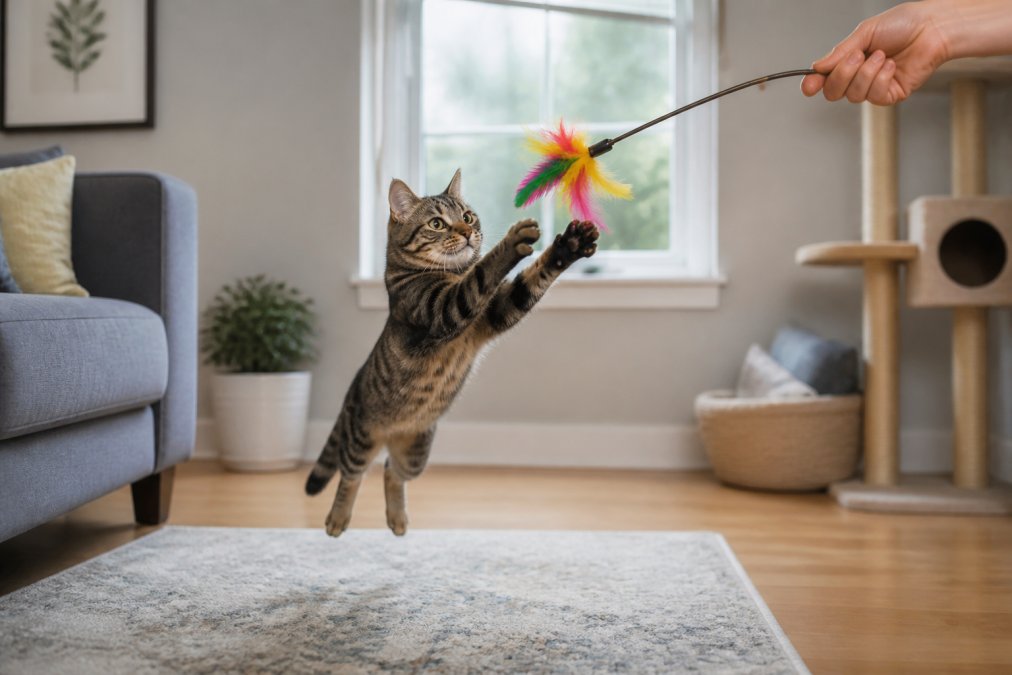
What makes wand toys so effective? They let you control the action. You set the pace and intensity. This gives your cat the chase and capture experience they crave without the danger of catching a real animal.
Vary the movements to keep things interesting:
- Quick flicks and jerks to trigger pouncing
- Slow drags across the floor for stalking behavior
- Sudden stops to simulate prey freezing
- Lifting the toy up and down for vertical chasing
Electronic motion toys offer another option. These battery-powered toys move on their own, so your cat can play solo. Look for toys with unpredictable movement patterns. Predictable motion gets boring fast.
Puzzle Feeders and Foraging Games
Puzzle feeders combine feeding with mental stimulation. Instead of eating from a bowl, your cat works to extract kibble or treats. This mimics natural foraging behavior and keeps their brain engaged.
Puzzle feeders come in many styles. Some have hidden compartments. Others require rolling or manipulation. The variety keeps your cat interested over time.
Start with simpler puzzles if your cat is new to them. A basic ball with holes is a good entry point. As your cat gets better at solving puzzles, introduce more complex designs. This progression prevents boredom and maintains the challenge.
Foraging games extend mealtime from five minutes to twenty. Your cat stays mentally active and feels more satisfied. This approach works especially well for cats that eat too quickly or seem restless after meals.
How Long to Play With Your Cat Daily
Most high energy cats need 20 to 30 minutes of active play spread throughout the day. This doesn't have to be one long session. Multiple short bursts work better.
Cats have short attention spans for intense play. Two 15-minute sessions are better than one 30-minute marathon. Your cat will stay more engaged and less likely to get frustrated.
The best schedule mimics natural hunting patterns. Cats are crepuscular, meaning they're most active at dawn and dusk. Plan play sessions during these times if possible:
- Early morning (before breakfast)
- Late afternoon (before dinner)
- Evening (before bedtime)
Watch your cat's body language. Heavy panting, dilated pupils, or tail twitching means it's time to stop. Let your cat rest and cool down. Pushing too hard can cause stress or overheating.
Adjust duration based on your cat's age and fitness level. Young cats can handle longer sessions. Senior cats may need shorter, gentler play. Overweight cats benefit from gradual increases in activity time.
Creating an Enriched Indoor Environment
Your home environment matters as much as active play. An enriched indoor space keeps your cat entertained even when you're busy. Environmental complexity reduces boredom and behavioral problems.
Vertical Territory and Climbing Structures
Cats think in three dimensions. They love climbing, perching, and surveying their territory from high places. Vertical space makes your home feel bigger and more interesting.
Cat trees and climbing structures are essential. Choose sturdy designs that won't wobble. Wobbly structures scare cats and discourage use. Look for multiple levels and varied textures. Carpet, sisal, and corrugated cardboard all appeal to different cats.
Place cat trees strategically:
- Near windows for visual stimulation
- In corners for security and observation
- In high-traffic areas for social engagement
- Away from hazards like ceiling fans or unstable items
Wall-mounted shelves create climbing highways. Cats can jump from shelf to shelf, exploring your home vertically. This type of catification transforms a boring room into an adventure playground.
Scratching posts serve double duty. They satisfy scratching urges while marking territory. Different post styles appeal to different cats. Some prefer vertical posts. Others like horizontal scratchers or angled boards.
Window Perches and Visual Stimulation
Windows are entertainment gold for indoor cats. Outside activity provides endless visual stimulation. Birds, squirrels, and passing people create a living show.
Install window perches at different heights. Cats love watching the world from an elevated position. Sunny perches are especially popular. Cats enjoy warmth while they observe.
Bird feeders outside your window make the view more interesting. A small feeder positioned where your cat can see it creates hours of engagement. The movement and sounds keep your cat mentally active.
Create layers of interest near windows:
- Window perches at various heights
- Plants on the sill (non-toxic varieties only)
- Reflective objects that catch light
- Rotating outdoor scenery throughout seasons
Consider a bird feeder or small water feature just outside the window. Moving water and wildlife movement captivate cats. This passive enrichment works when you can't actively play.
How to Calm an Anxious Cat Through Play
Anxious cats often seem hyperactive. They pace, vocalize excessively, or act aggressive. This anxiety-driven energy needs different handling than simple boredom.
Structured play sessions actually calm anxious cats. Predictable routines reduce stress. When your cat knows playtime happens at specific times, they relax between sessions. The routine itself becomes soothing.
Use gentler toys for anxious cats. Fast, unpredictable motion can increase stress. Slow, rhythmic movements work better. Let your anxious cat control the pace when possible.
Puzzle feeders help anxious cats too. The focus required for problem-solving redirects nervous energy.
Clicker Training and Trick Training for Mental Engagement
Clicker training channels mental energy into learning. It's one of the most effective ways to entertain high energy cats while building your relationship.
Start with simple behaviors your cat already does:
- Sitting
- Touching your hand with their nose
- Jumping on a designated object
- Coming when called
Common tricks to teach include:
- High-five with your hand
- Jumping through a hoop
- Walking on a harness
- Responding to their name
- Using the toilet (advanced)
DIY Enrichment Projects and Budget-Friendly Ideas
You don't need expensive toys to entertain high energy cats. Simple DIY projects work just as well. Cardboard boxes, paper bags, and household items become entertainment gold.
Common Mistakes to Avoid When Entertaining High Energy Cats
Even well-intentioned owners make mistakes that reduce enrichment effectiveness. Knowing what to avoid saves frustration and keeps your cat safe.
| Strategy | Duration | Frequency | Best For |
|---|---|---|---|
| Wand toy play | 10-15 minutes | 2x daily | Active hunting instinct |
| Puzzle feeders | 5-10 minutes | 1-2x daily | Mental stimulation |
| Window perch time | Ongoing | Daily | Visual enrichment |
| Clicker training | 5-10 minutes | 3-5x weekly | Learning and bonding |
| DIY projects | Variable | As needed | Budget-friendly rotation |
| Climbing structures | Ongoing | Daily | Vertical exploration |
Frequently Asked Questions
What's the difference between a high energy cat and a bored cat?
High energy cats have naturally active temperaments and need consistent mental stimulation and physical activity to feel satisfied. Bored cats show behavioral challenges like destructive scratching or excessive meowing because their environment lacks enrichment. Both benefit from interactive play and puzzle feeders, but high energy cats require more frequent engagement throughout the day. If your cat's behavior improves noticeably after 20-30 minutes of interactive play, they're likely high energy rather than bored.
How long should I play with my high energy cat each day?
Most high energy cats need 30-60 minutes of active play spread throughout the day in multiple sessions. Two 15-minute play sessions with wand toys, combined with 10-15 minutes of puzzle feeder time, works well for many cats. Watch your cat for signs of fatigue, including slower movements and reduced interest in toys. Some cats may need more or less depending on age and individual temperament. The goal is redirecting their hunting instinct and prey drive into positive activities.
What are the best interactive toys for entertaining high energy cats?
The most effective options include wand toys with feathers or strings, electronic motion toys that mimic prey, puzzle feeders, and laser pointers used safely. Rotate toys every few days to prevent boredom and maintain interest. Puzzle feeders encourage foraging behavior and provide mental stimulation while slowing down eating. Interactive toys that require your participation, like wand toys, create bonding opportunities while satisfying your cat's hunting instinct. Combine different toy types to address various enrichment needs.
Can clicker training help calm a high energy cat?
Yes, clicker training and trick training provide cognitive engagement that can help redirect excess energy into positive behaviors. Training sessions offer mental stimulation comparable to physical play and help build focus and impulse control. Start with 5-10 minute sessions using positive reinforcement and treats. This approach works especially well for anxious cats, as the structured activity and reward system create a calming routine. Training also strengthens your bond and gives your cat a sense of accomplishment.