

How to Calm an Anxious Cat: A Step-by-Step Guide

Table of Contents
- Recognizing Signs of Cat Anxiety
- Step 1: Create a Safe and Quiet Environment
- Step 2: Use Cat Calming Pheromones Effectively
- Step 3: Establish a Predictable Routine
- Step 4: Provide Environmental Enrichment for Cats
- Step 5: Desensitization and Counter-Conditioning Techniques
- Managing Anxiety in Multi-Cat Households
- Natural Remedies vs. Medication: What Works
- Frequently Asked Questions
Last Updated: September 3, 2026
Recognizing Signs of Cat Anxiety
Anxiety in cats manifests through physical and behavioral changes. Common indicators include excessive vocalization, destructive behavior, inappropriate elimination, changes in grooming habits, hyper-vigilance, or complete withdrawal.
Physical signs include dilated pupils, flattened ears, puffed tail, tense posture, excessive grooming causing hair loss, loss of appetite, or digestive issues.
Physical and behavioral indicators
Visible indicators include excessive meowing (especially at night or when you leave), destructive behavior, and inappropriate elimination outside the litter box, often signaling stress rather than medical issues.
Anxious cats crouch low, tuck their tail, flatten ears, and avoid eye contact. Some become overly clingy; others withdraw. Red flags include sudden aggression, excessive self-grooming causing bald patches, or refusal to eat.
When to consult your veterinarian
Schedule a veterinary examination to rule out medical conditions like pain or thyroid issues. Your veterinarian can recommend medication, natural remedies, or behavioral modifications tailored to your cat.
Step 1: Create a Safe and Quiet Environment
A safe environment is fundamental to managing anxiety, but the approach differs for everyday stress versus post-traumatic anxiety in rescue or stray cats.
For all anxious cats: foundational safe space setup
Designate a quiet room away from loud noises, containing a litter box, water, food, and comfortable bedding. Provide hiding spots like cardboard boxes or covered beds, giving your cat control over exposure to stimuli.
Keep the layout consistent, use calming scents like lavender, maintain comfortable temperature, use soft lighting, and provide multiple escape routes.
Specialized setup for rescue and post-traumatic stress cats
Rescue cats require a structured 30-day acclimation period to establish trust and safety (aspca.org).
Days 1-7: Confine your rescue cat to a single small room with a litter box, food, water, and at least two hiding spots. Keep it quiet and dim. Limit interaction to brief feeding and litter maintenance. Hiding is normal; do not force interaction.
Days 8-14: Once your cat eats and uses the litter box consistently, leave the door open for 15-30 minutes to explore an adjacent room. Gradually extend the time. Speak softly and avoid sudden movements.
Days 15-30: Expand access room by room over 1-2 weeks. Keep the original safe room permanently available as a retreat space.
Maintain consistent feeding times, predictable lighting and noise, and avoid rearranging furniture. Rescue cats are hypervigilant to environmental changes.
Environmental modifications for trauma-informed care
Position furniture to create visual barriers and hiding spots throughout your home. Use window coverings to reduce sudden light changes that trigger fear.
If your rescue cat shows extreme fear (freezing, inability to eat, excessive hiding beyond week one, or aggression), consult your veterinarian about short-term anti-anxiety medication to support acclimation.
Step 2: Use Cat Calming Pheromones Effectively
How pheromone diffusers work
Pheromone diffusers release synthetic versions of natural calming chemicals cats produce. They mimic the natural marking process, signaling that an environment is secure and familiar.
Cats have a specialized sensory system that detects pheromones. Exposure lowers stress responses without sedation, with many cats showing improvement within the first week.
Placement and usage tips
Position diffusers where your cat spends the most time. Use multiple diffusers in multi-cat households. Keep them away from air vents and fans.
Replace refills every 30 days. Consistency matters; pheromones work best when present continuously. Some cats respond within days; others take weeks.
Step 3: Establish a Predictable Routine
Establish consistent feeding times, play schedules, and sleep routines. Predictability reduces uncertainty and helps anxious cats feel more in control.
Sudden changes can trigger or worsen anxiety. Introduce unavoidable changes gradually, allowing your cat time to adjust.
Anxious cats pick up on human stress. Maintain calm, predictable interactions and avoid sudden movements or loud voices.
Step 4: Provide Environmental Enrichment for Cats
Vertical space and hiding spots
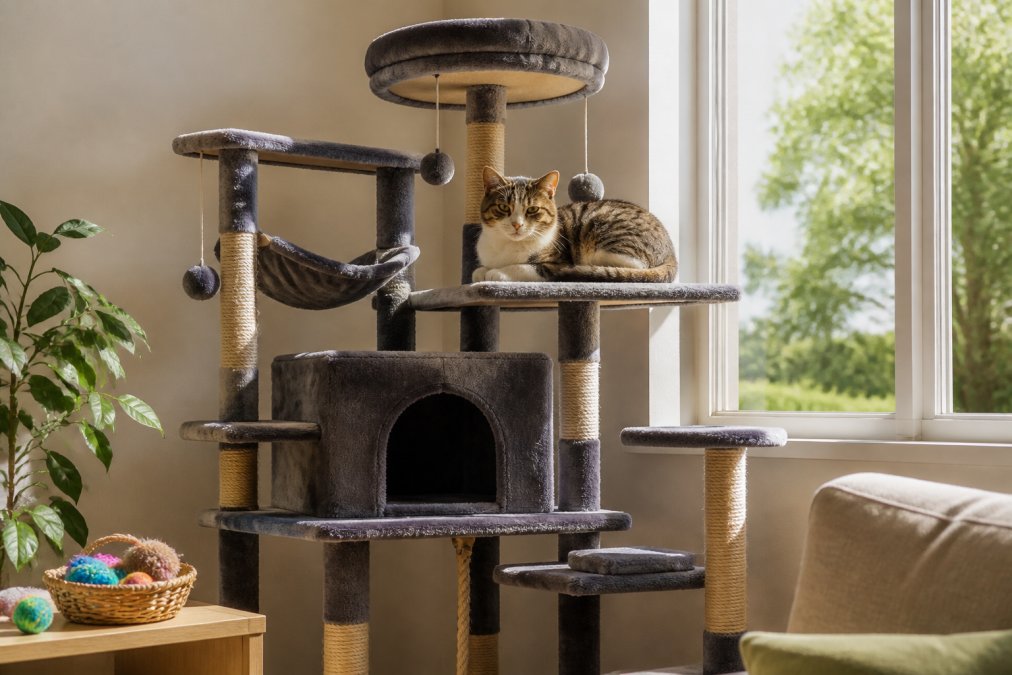
Install cat trees, wall-mounted shelves, or window perches to allow your cat to observe from an elevated position. This sense of control significantly reduces anxiety and helps multi-cat dynamics.
Provide multiple hiding spots throughout your home, boxes, covered beds, tunnels, or paper bags. Blanco's Pet Store offers cat enrichment products designed for anxious cats, including multi-level trees and hiding spots.
Mental stimulation through play and interaction
Interactive play redirects anxious energy. Aim for 2-3 daily sessions of 10-15 minutes using wand toys, laser pointers, or balls to build confidence and reduce stress.
Puzzle feeders and treat-dispensing toys engage hunting instincts and occupy your cat's mind. Rotate toys regularly to maintain interest without overwhelming your cat.
Step 5: Desensitization and Counter-Conditioning Techniques
Desensitization gradually exposes your cat to stress triggers at low levels, then slowly increases exposure. Counter-conditioning pairs triggers with positive experiences like treats or play, rewiring emotional responses.
For example, if your cat fears car rides, start by sitting in the parked car without the engine running. Reward calm behavior, then gradually introduce engine sounds, short drives, and longer trips.
Move at your cat's pace; never force exposure. Signs of progress include reduced hiding, increased appetite, calmer body language, and more interactive behavior.
Managing Anxiety in Multi-Cat Households
Territorial conflicts and resource competition worsen anxiety in multi-cat homes. Provide one litter box per cat plus one extra, separate feeding stations, and abundant vertical space (aafco.org).
Create individual safe zones for each cat. Some anxious cats benefit from temporary separation, then gradual reintroduction. Pheromone diffusers in shared spaces help all cats feel secure.
Watch for bullying or resource guarding. Feed cats in separate rooms or provide multiple litter box locations to reduce competition-related anxiety. Blanco's Pet Store offers space-efficient solutions for multi-cat homes.
Natural Remedies vs. Medication: What Works
Managing cat anxiety requires choosing between natural remedies, behavioral modification, and prescription medication. Understanding each option helps you decide with your veterinarian.
Natural supplements and calming treats
Natural remedies are typically the first line of intervention for mild to moderate anxiety. Common active ingredients include:
L-theanine is an amino acid that promotes relaxation by increasing GABA, a neurotransmitter that reduces nervous system activity. It is non-prescription, has minimal side effects, and typically shows effects within 1-2 weeks.
Valerian root works faster than L-theanine (3-5 days) but some cats dislike the smell and may experience mild drowsiness. Best for short-term anxiety like travel or vet visits.
Chamomile and passionflower are gentler herbal extracts suitable for long-term use. They take 2-3 weeks to show effects and work best as part of a comprehensive approach.
Tryptophan supplements support serotonin production and mood regulation. They are slower-acting (3-4 weeks) but very safe for long-term use.
Natural remedies vary widely in effectiveness. They work best combined with environmental modifications and behavioral techniques.
Pheromone diffusers as a complementary tool
Synthetic pheromone products like Feliway release calming pheromones cats naturally produce. They have no systemic effects and are safe for indefinite use, showing effects within 1-2 weeks. Most effective when combined with other interventions.
Prescription anti-anxiety medications
When natural remedies and environmental modifications do not provide adequate relief within 4-6 weeks, prescription medication becomes appropriate. Common options include:
SSRIs like fluoxetine increase serotonin availability, reducing anxiety and compulsive behaviors. They take 4-6 weeks to reach full effectiveness and require daily dosing. They are suitable for long-term use with mild side effects like temporary appetite changes or drowsiness.
Buspirone targets serotonin and dopamine receptors with faster onset (1-2 weeks) than SSRIs. Often used for acute anxiety or as bridge therapy. Typically dosed twice daily and well-tolerated.
Benzodiazepines like alprazolam are fast-acting (30 minutes to 2 hours) and reserved for acute episodes like vet visits or thunderstorms. Not appropriate for chronic use due to dependence risk.
Medication works alongside environmental modifications and behavioral work. A medicated cat still benefits from a safe environment, predictable routine, and enrichment.
Combination protocols and realistic timelines
Most veterinarians recommend a tiered approach:
Weeks 1-2: Implement environmental modifications, natural supplements, and behavioral modification. Monitor for improvement.
Weeks 3-6: Continue interventions. Many cats show measurable improvement by week 4-6.
Week 6+: If anxiety persists, consult your veterinarian about prescription medication. Many cats benefit from combining an SSRI for baseline anxiety plus a benzodiazepine for high-stress events.
Medication vs. natural remedies: key differences
Natural remedies are slower-acting and less predictable but have minimal side effects. Prescription medications are faster and more reliable but require veterinary oversight.
The right choice depends on your cat's anxiety severity, timeline, and your veterinarian's assessment. Many cats benefit from combining environmental safety, behavioral modification, pheromone support, and either natural supplements or medication. Discuss your cat's situation with your veterinarian to develop a tailored plan.
Frequently Asked Questions
What are the most common signs of cat anxiety?
Common signs of cat anxiety include excessive vocalization, hiding for extended periods, inappropriate elimination outside the litter box, over-grooming or hair loss, loss of appetite, and aggression. You may also notice dilated pupils, flattened ears, a tucked tail, or unusual body tension. Some anxious cats become hyperactive or destructive. If your cat displays multiple signs, consult your veterinarian to rule out medical issues and discuss behavioral modification strategies.
Do cat calming pheromones really work?
Cat calming pheromones, such as feline pheromone diffusers, mimic natural calming scents that cats produce naturally. Research shows they can reduce stress-related behaviors in many cats, though effectiveness varies by individual. They work best as part of a comprehensive approach that includes environmental changes, routine, and mental stimulation. Pheromone products are most effective when started before a stressful event and used consistently over several weeks.
How can I help my anxious rescue cat feel safe?
Rescue cats with post-traumatic stress need extra patience and a structured approach. Start by providing a dedicated safe zone with hiding spots, food, water, and a litter box. Maintain a consistent daily routine to build predictability. Use pheromone diffusers and allow your cat to approach you on their own terms. Avoid forcing interaction, and reward calm behavior with treats and gentle praise. Gradual desensitization to household sounds and activities helps rebuild trust over time.
When should I contact my veterinarian about my cat's anxiety?
Contact your veterinarian if your cat shows sudden behavioral changes, persistent anxiety that interferes with eating or litter box use, or signs of fear-based aggression. Your vet can rule out underlying medical conditions, assess whether medication might help, and recommend a behavioral modification plan. Early intervention prevents anxiety from escalating and improves your cat's quality of life significantly.