

Durable Cat Furniture for Small Apartments: 7 Space-Saving Options

Table of Contents
- Quick Comparison Table: Durable Cat Furniture for Small Apartments
- How We Evaluated These Options
- Wall-Mounted Cat Wall Furniture for Small Spaces
- Floor-Standing Cat Trees That Fit Tight Corners
- Multi-Functional Designs: Scratching Posts and Lounges Combined
- How to Hide Cat Litter Box in Living Room While Maximizing Furniture Space
- Which One Should You Pick?
- Frequently Asked Questions
Last Updated: September 22, 2026
Quick Comparison Table: Durable Cat Furniture for Small Apartments
| Furniture Type | Best For | Key Advantage | Space Footprint |
|---|---|---|---|
| Wall-mounted systems | Renters & minimalists | Zero floor space | Vertical only |
| Compact floor trees | Budget-conscious owners | Affordable & sturdy | 2-3 sq ft |
| Cardboard loungers | Space-constrained apartments | Ultra-compact design | 1-2 sq ft |
| Modular wall furniture | Design-focused owners | Customizable layout | Vertical only |
| Multi-functional pieces | Multi-pet households | Dual-purpose use | Compact footprint |
Choosing durable cat furniture for small apartments means balancing vertical enrichment, minimal floor footprint, and stability. Most apartment dwellers face limited square footage, rental restrictions on wall damage, and the need for pieces that blend into home decor.
What separates effective pieces from clutter is whether they solve the small-space problem or just compress a full-size tree. Key factors: weight-to-floor-space ratio, scratch resistance lasting beyond six months, and mounting solutions that don't forfeit security deposits.
How We Evaluated These Options
Sisal rope, real wood, and high-density cardboard are generally considered durable materials for cat furniture. Space efficiency is often measured by the ratio of usable perching area to square feet occupied. Stability is important because wobbly structures can deter cats from using them. Rental-friendly options often include products using tension rods, adhesive strips, or furniture hooks, as opposed to those requiring permanent wall anchoring.
Wall-Mounted Cat Wall Furniture for Small Spaces
Wall-mounted systems consume zero floor space while delivering maximum vertical territory, leaving walkways clear and sightlines open.
Rental-Friendly Installation: The Critical Difference
Most wall-mounted cat furniture requires drilling into studs, which voids security deposits and violates lease terms. For renters, non-destructive alternatives exist and actually work.
Tension rod systems use spring-loaded rods wedged between floor and ceiling. Tension rod systems can use spring-loaded rods wedged between floor and ceiling. These systems can offer modular shelves that sit on tension rods without fasteners. Installation can be quick, require no tools, and leave zero wall damage. Tension rods can be rated for significant weight, holding cat furniture securely. Limitation: they typically work best in rooms with standard ceiling heights and unobstructed wall space; sloped ceilings, crown molding, or baseboards can prevent proper placement.
Command strips and adhesive anchors can support lightweight shelves up to 16 pounds and release cleanly without paint damage. They work for single lightweight shelves or hammock mounting points but are insufficient for multi-shelf systems. Landlords often accept Command strips explicitly because they're removable; many rental agreements permit them where drilling is forbidden.
Furniture-mounted hooks attach hammocks or lightweight shelves to existing furniture using heavy-duty adhesive hooks or over-the-door hangers. This requires zero wall contact and is infinitely portable. Tradeoff: you're limited to furniture placement and weight capacity; over-the-door hooks typically hold 15-20 pounds, suitable for a single hammock but not multi-level systems.
Permanent wall anchors (for owners): Drilling into wall studs delivers the most stable, customizable solution. Catastrophic Creations Modular Wall Furniture uses heavy-duty shelf brackets anchored directly to studs. Installation requires a drill, stud finder, and 1-2 hours, but delivers rock-solid stability with zero wobble. Modular design lets you start with three shelves and expand later.
Acoustic Considerations for Shared Walls
Cats jumping on hard wood or plastic shelves create impact noise that travels through walls. Wall-mounted systems with carpeted or padded surfaces significantly reduce noise. If a system uses bare wood, adding stick-on carpet tiles or adhesive-backed felt pads can help dampen impact noise.
Comparing Installation Methods for Small Apartments
| Installation Method | Renter-Friendly | Stability | Setup Time | Damage Risk | Best For |
|---|---|---|---|---|---|
| Tension rods | Yes | High | 15 min | None | Renters with standard ceilings |
| Command strips | Yes | Medium | 10 min | Minimal | Single lightweight shelves |
| Furniture hooks | Yes | Medium | 5 min | None | Hammocks, temporary setups |
| Stud-mounted brackets | No | Excellent | 1-2 hrs | Permanent holes | Owners, long-term installations |
Hook-on mounting cat hammock seats offer a compromise for renters seeking simplicity. These fabric hammocks attach to window frames or furniture using heavy-duty hooks and straps, support up to 40 pounds, and require zero permanent installation. Machine-washable fabric means easy cleaning. Catch: they work only with accessible window frames or furniture edges.
Floor-Standing Cat Trees That Fit Tight Corners
Floor-standing trees remain practical for renters and owners wanting quick installation without landlord negotiations. The challenge is finding one compact enough for small apartments while sturdy enough for daily use.
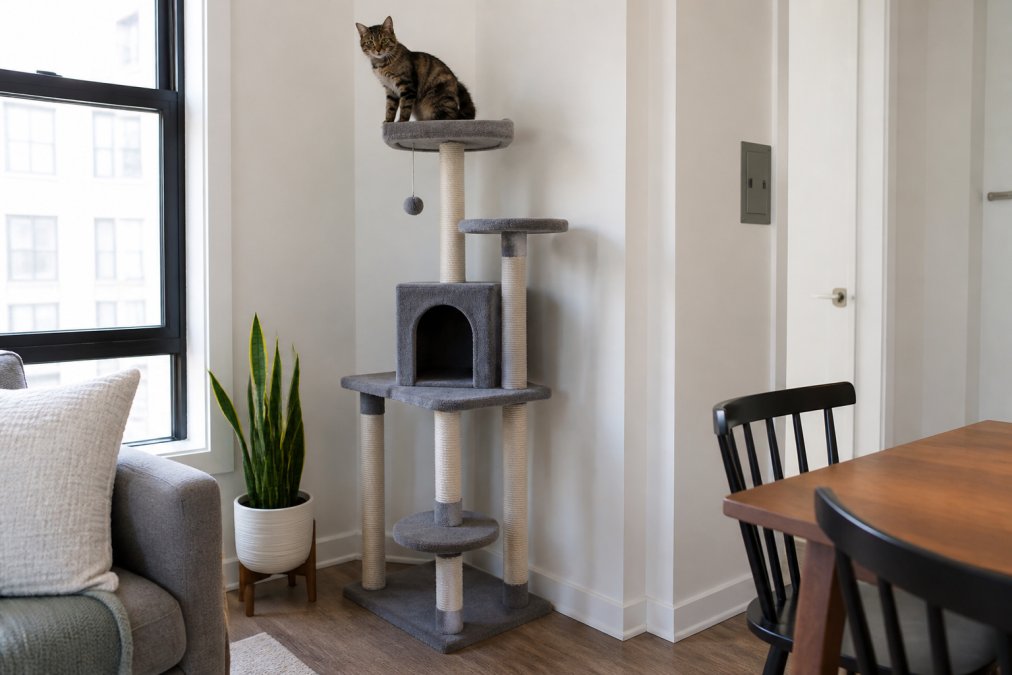
Go Pet Club 70-in Multi-Level Cat Tree delivers value at under $50. At 70 inches tall with a 24-inch footprint, it climbs vertically without sprawling. Multiple levels, sisal-wrapped posts, and integrated hanging toys provide enrichment. Limitation: the footprint still occupies floor space, and the structure can wobble on uneven floors common in older apartments.
New Cat Condos Compact Cat Trees feature solid wood construction and handcrafted design, built specifically for small spaces and often shipped fully assembled. The traditional aesthetic blends into home decor. Solid wood means genuine durability lasting years with minimal degradation. Downside: weight and limited customization; you buy what's offered, not a modular system you expand later.
Multi-Functional Designs: Scratching Posts and Lounges Combined
Not every cat needs a towering tree. Some apartments benefit more from multi-functional pieces that serve dual purposes: scratching surfaces and lounging areas without consuming the footprint of a traditional cat condo.
PetFusion Ultimate Cat Scratcher Lounge is high-density recycled corrugated cardboard designed as both scratching post and lounging surface. Reversible design extends product life. Appeal: ultra-compact footprint, affordable pricing, and genuine functionality. Cats actually use it. Limitation: cardboard eventually shreds after months of heavy scratching, making it a consumable item you refresh periodically rather than a long-term investment.
Mau Cento Cat Tree represents the opposite end of the spectrum: premium, aesthetic-focused design. Real tree branch construction with hand-woven rattan baskets creates a piece that looks like home decor, not pet equipment. The natural materials feel substantial and durable. Replaceable carpet pads mean you refresh worn areas without replacing the entire structure.
This is furniture that apartment guests won't immediately clock as "cat stuff." It's beautiful enough to place in a living room without aesthetic compromise.
How to Hide Cat Litter Box in Living Room While Maximizing Furniture Space
The litter box is the furniture question nobody wants to solve. In small apartments, hiding it while maintaining easy access and odor control requires strategic thinking. This is where multi-functional furniture and spatial design intersect with practical pet care.
Which One Should You Pick?
Start with your constraint: are you a renter or an owner? Do you have wall space and landlord permission?
Frequently Asked Questions
What materials make durable cat furniture last the longest in small apartments?
Solid wood, sisal rope, and high-density corrugated cardboard are top choices for durability. Sisal rope resists shredding better than jute, while solid hardwood construction prevents wobbling. Replaceable carpet pads and reversible designs extend product life. Natural materials like bamboo and tree branches offer both durability and aesthetic appeal, making them ideal when floor space is limited and furniture visibility is high.
Is cat wall furniture for small spaces really worth installing if I'm renting?
Rental-friendly options exist that don't require permanent wall drilling. Tension-rod systems, furniture-hooking hammocks, and command-strip mounting solutions work on most apartment walls without damage. Wall-mounted cat furniture completely clears floor space, which is critical in small apartments. If you prefer permanent installation, check your lease first, many landlords allow mounting if you patch holes before moving.
How do I know if durable cat furniture will actually fit my small apartment layout?
Measure your available floor space and ceiling height before purchasing. Multi-level cat trees typically range from 24 inches to 70 inches tall. Wall-mounted systems can be customized to your exact dimensions. Check the weight capacity and base footprint in product specifications. Consider sight lines, tall, narrow designs work better than wide, squat models in tight spaces. Take photos of your room layout and compare them against product dimensions.
Can durable cat furniture also work as home decor in a small apartment?
Yes, modern designs can blend seamlessly with contemporary interiors. Bamboo, wood finishes, and minimalist aesthetics can look like shelving rather than pet gear. In small apartments where every piece is visible, furniture-grade cat trees can become functional decor. Neutral colors and clean lines often complement apartment living better than bright colors or bulky plastic designs.
What's the difference between a cat tree, a cat condo, and a scratching post for apartment living?
A cat tree offers multiple levels and perches for climbing and observation. A cat condo includes enclosed spaces (caves or boxes) for privacy and security. A scratching post focuses on one function. In small apartments, multi-functional designs that combine scratching, lounging, and perching in one compact footprint save space. Modular systems let you add components as your cat's needs change, making them ideal for apartments where flexibility matters.