

Best Travel Crates for Multiple Pets

Table of Contents
- Travel Crates for Multiple Pets: What Matters Most
- Quick Comparison Table
- Hard-Sided Crates: Durability and Crash Protection
- Soft-Sided and Collapsible Crates for RV Travel
- Airline Approved Pet Carriers for Two Pets
- How to Crate Train Multiple Dogs for Travel
- Key Features to Evaluate for Multi-Pet Transport
- Common Mistakes to Avoid When Traveling With Multiple Pets
- Frequently Asked Questions
Last Updated: October 1, 2026
Travel Crates for Multiple Pets: What Matters Most
Traveling with multiple pets demands more than just throwing two crates in the car and hoping for the best. The logistics of managing space, safety, and comfort for multiple animals, especially across long distances or air travel, require careful planning and the right equipment.
At Blanco's Pet Store, we understand the unique challenges pet owners face when transporting multiple companions. Whether you're managing two anxious dogs, a mix of cats and dogs, or navigating airline requirements for multiple pets, the wrong crate choice creates stress for both you and your animals.
The best travel crates for multiple pets balance durability, security, and space efficiency. Your choice depends on vehicle type, pet size, travel frequency, and whether you're flying or driving. Some owners need hard-sided crates that offer crash protection and can be stacked in tight spaces. Others prioritize soft-sided, collapsible options that fold away when not in use. Airline-approved carriers solve a different problem entirely: they meet specific dimension and ventilation standards required by major carriers.
Below, we'll walk you through the key features that separate adequate crates from genuinely reliable ones, then break down the top options for different travel scenarios.
Quick Comparison Table
| Crate Type | Best For | Key Advantage | Primary Tradeoff |
|---|---|---|---|
| Hard-sided (GUNNER, RuffLand) | Maximum safety and crash protection | Durable, stackable, secure latches | Heavy, bulky, not collapsible |
| Soft-sided collapsible (EliteField, Lesure) | RV and car travel with storage constraints | Lightweight, folds for storage, portable | Not suitable for aggressive chewers |
| Airline-approved carriers (Peanut's, K&H) | Flight travel and layovers | Meets airline dimensions, expandable options | Limited to smaller pets |
| Budget hard-sided (Amazon Basics, Petmate) | Short trips and smaller pets | Affordable, durable plastic | Limited crash protection data |
Hard-Sided Crates: Durability and Crash Protection
Hard-sided crates offer the most strong protection during vehicle travel. The GUNNER Kennel stands out as the industry standard, its double-walled rotomolded construction earned a 5-Star Crash Test Rating from the Center for Pet Safety, the only independent crash-testing organization for pet containment. This matters because a standard plastic crate offers no real protection if you're in an accident; the pet becomes a projectile.
For multi-pet transport, hard-sided crates have a critical advantage: they stack. RuffLand's Intermediate Kennel uses a one-piece seamless construction that allows you to secure multiple crates vertically in an SUV or truck bed. The stackable design works because the crates have ventilation holes on all sides, so airflow isn't compromised when crates are positioned close together.
The tradeoff is obvious: hard-sided crates are heavy and take up storage space when not in use. A GUNNER Kennel large enough for a 60-pound dog weighs around 90 pounds empty. If you travel frequently and need to store the crate at home, this becomes a real problem. For owners who drive the same route regularly and can leave the crate installed, the safety advantage justifies the bulk.
Setup is straightforward, no assembly required. Just place the crate in your vehicle, secure it with tie-down pins or straps, and you're ready to travel. The secure latching mechanisms on both GUNNER and RuffLand models prevent accidental opening during sharp turns or sudden stops.
Soft-Sided and Collapsible Crates for RV Travel
Soft-sided, collapsible crates solve the storage problem that hard-sided options create. The EliteField Collapsible Dog Crate features a steel tube frame with a fabric exterior that collapses completely, it folds down to roughly the size of a sleeping bag and fits in a closet or trunk.
For RV owners managing multiple pets in limited space, this matters tremendously. You can deploy the crate when parked, then collapse it when you're driving. The three-door access on EliteField models means you can open the crate from the top or sides depending on your vehicle's layout, which helps when space is tight.
The Lesure Soft-Sided Pet Crate takes a similar approach with a quick-fold mechanism and removable, machine-washable mat. Both options include ventilation mesh on multiple sides, which is essential when crates are positioned close together in an RV or vehicle cabin.
The honest limitation: soft-sided crates aren't designed for aggressive chewers or anxious pets that panic during travel. The mesh walls can be torn, and the fabric exterior offers no protection if your pet is stressed. If you have a dog that exhibits separation anxiety or destructive behavior during car rides, soft-sided crates will likely fail within a few trips.
Soft-sided crates also lack the crash protection of hard-sided alternatives. They're suitable for calm pets and short to medium-distance travel, but not ideal if you're frequently on highways or traveling with unpredictable animals.
Airline Approved Pet Carriers for Two Pets
Airline-approved carriers follow strict dimensional requirements set by major carriers like Delta, United, and American Airlines. The standard limit is 19" long × 10" wide × 11" high for underbelly cargo, though some carriers allow slightly larger dimensions in the cabin.
Peanut's Expandable Pet Carrier addresses a real problem: standard airline carriers feel cramped for longer flights. The expandable mesh lounge extends the usable space during layovers without exceeding airline dimensions when collapsed. The padded shoulder strap makes it easier to carry through terminals, and the water-resistant fabric handles inevitable spills from water bowls.
K&H Pet Products Travel Safety Carrier takes a different approach, prioritizing seatbelt attachment for car portions of your journey. It collapses for storage and includes breathable mesh windows, making it suitable for pets that need to see out during drives. The key feature: it actually attaches to your vehicle's seatbelt system, preventing the carrier from sliding around during acceleration or braking.
For owners traveling with two small pets, airline-approved carriers create a real constraint: you typically need one carrier per pet. A single large airline-approved carrier can't safely contain two pets because they'll fight for space and stress each other. This means buying two carriers, which adds cost and storage complexity.
The Petmate Two-Door Plastic Kennel meets most airline requirements and works for both home training and travel. Its two-door entry system (front and top) gives you flexibility in how you load your pet, and the secure latching mechanism prevents accidental opening during baggage handling. The trade-off is that it's not collapsible, so storage at home requires dedicated space.
How to Crate Train Multiple Dogs for Travel
Crate training is non-negotiable if you want calm, cooperative pets during travel. A dog that panics in a crate becomes a distraction and a safety risk. The process takes patience but pays dividends immediately.
Start in your home with the crate door open. Place treats and toys inside, but don't force your dog in. Let them explore voluntarily. This phase should last several days, you're building positive association, not compliance.
Once your dog enters willingly, close the door for just 10-15 seconds while you're in the room. Reward them when you open it. Gradually extend the duration: 30 seconds, then a minute, then five minutes. The goal is for your dog to see the crate as a safe space, not a punishment.
For multiple dogs, train them separately first. Once each dog is crate-trained individually, introduce them to their crates side by side in the same room. This teaches them that crate time is normal and not a threat, even when other animals are present.
The critical mistake: never use the crate as punishment. If you chase your dog to the crate or force them in, you've just taught them the crate is a bad place. Crate training works through positive association only.
When you're ready to travel, take short car rides first, five minutes, then ten. Reward calm behavior with treats and praise when you arrive. Many dogs associate car rides with vet visits, so positive repetition rewires that association.
Key Features to Evaluate for Multi-Pet Transport
Ventilation and airflow matter more with multiple animals in close proximity. A crate with ventilation holes on all sides ensures air circulates even when crates are positioned back-to-back. Poor ventilation creates heat buildup, especially dangerous during summer travel.
Common Mistakes to Avoid When Traveling With Multiple Pets
Many owners make preventable errors that create stress and safety risks during travel.
Frequently Asked Questions
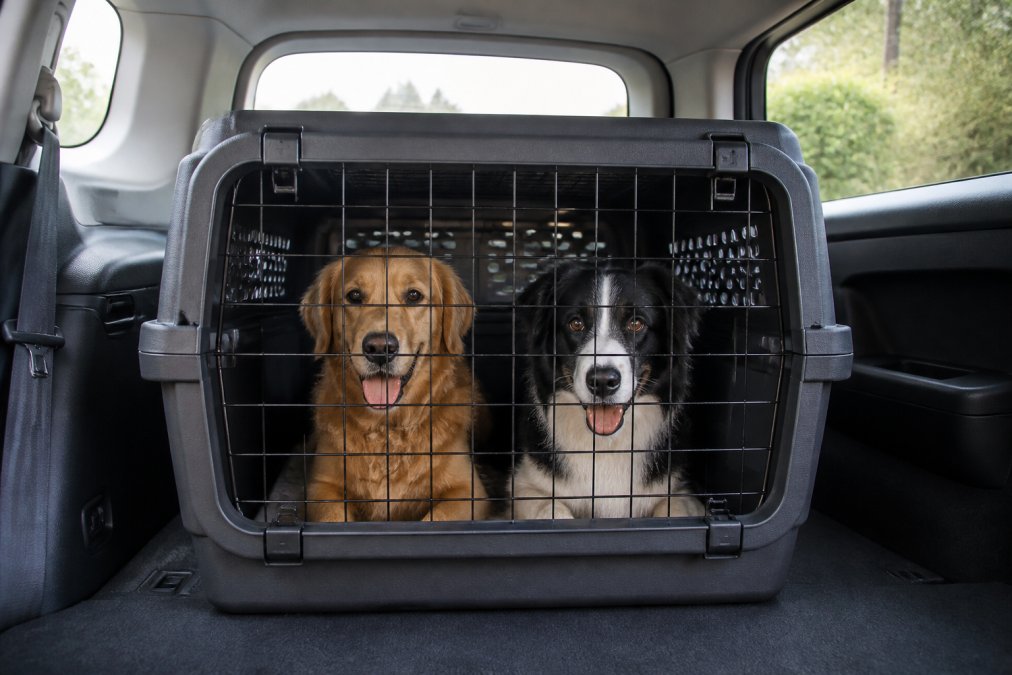
Can you put two dogs in one travel crate?
Yes, if both dogs are small and comfortable together. However, most experts recommend separate crates for safety and to prevent stress. If you must use one crate, ensure it meets airline standards for combined weight capacity and provides adequate ventilation. Separate crates allow each dog personal space, reduce anxiety, and make it easier to manage bathroom breaks during travel.
What are the best airline approved pet carriers for two pets?
Hard-sided carriers like the Petmate Two-Door Plastic Kennel meet most airline requirements and can accommodate two small pets if properly sized. Soft-sided carriers such as the Peanut's Expandable Pet Carrier offer airline-friendly dimensions with extra space for layovers. Always verify your specific airline's pet policy, as dimensions and weight limits vary. Check the International Air Transport Association (IATA) guidelines for carrier specifications.
Are soft-sided or hard-sided crates better for multi-pet travel?
Hard-sided crates offer superior crash protection and durability for vehicle travel, making them ideal for long road trips with multiple pets. Soft-sided crates are lighter, more portable, and easier to collapse for storage, making them better for air travel or RV setups. Choose hard-sided for maximum safety in cars, soft-sided for convenience and portability. Consider your primary travel method when deciding.
How do I choose the right size travel crate for multiple pets?
Measure each pet from nose to tail and add 4-6 inches for comfort. For multiple pets, calculate combined dimensions or use separate crates. Ensure the crate allows your pet to stand, turn around, and lie down. Crates that are too large reduce the sense of security; too small causes stress and safety issues. When stacking crates in a vehicle, account for height and weight distribution to prevent tipping.