

Best Pet Furniture for Small Apartments: 2026 Guide

Table of Contents
- Quick Comparison: Best Pet Furniture for Small Apartments
- How We Evaluated These Space-Saving Pieces
- Hidden Litter Box Furniture That Doubles as Decor
- Space-Saving Cat Trees and Vertical Options
- Multi-Functional Pet Beds for Tight Floor Plans
- Rental-Friendly and Senior-Pet Considerations
- Budget vs. Investment: What to Expect
- Conclusion: Choosing the Best Pet Furniture for Small Apartments
- Frequently Asked Questions
Last Updated: September 28, 2026
Quick Comparison: Best Pet Furniture for Small Apartments
Small apartments force a hard trade-off: every piece of furniture has to earn its floor space. The best pet furniture for small apartments solves two problems at once, giving your cat or dog what they need while keeping your rooms livable.
Here's the shortlist before the detail:
| Product | Type | Starting Price | Best For |
|---|---|---|---|
| Hidden Litter Box Enclosure | Concealed litter furniture | $179.95 | Cat owners with no spare corner |
| Cat Window Perch | Wall-mounted perch | $35 | Cats with zero floor space to spare |
| Wall-Mounted Cat Shelves | Modular shelving | $60 | Active cats needing vertical exercise |
| Narrow Profile Cat Tree | Compact cat tree | $85 | Corners and behind-door gaps |
| Pet Bed Ottoman | Multi-functional pet bed | $120 | Small living rooms |
| Desk-Integrated Dog Crate | Multi-functional crate | $350 | Remote workers with dogs |
| Home Reserve Laney Sofa | Pet-friendly seating | $800 | Durable seating with hidden storage |
| Joybird Eliot Sofa | Pet-friendly seating | $1,800 | Design-first households |
| 7th Avenue Modular Sofa | Pet-friendly seating | $2,500 | High-traffic homes |
How We Evaluated These Space-Saving Pieces
We scored every piece on four criteria: floor footprint, multifunctional use, durability against claws and accidents, and rental fit.
Hidden Litter Box Furniture That Doubles as Decor
Hidden litter box furniture is a cabinet built to conceal a litter box while functioning as a side table or nightstand. These enclosures contain odor and litter tracking, turning the least attractive object in your apartment into furniture guests won't question.
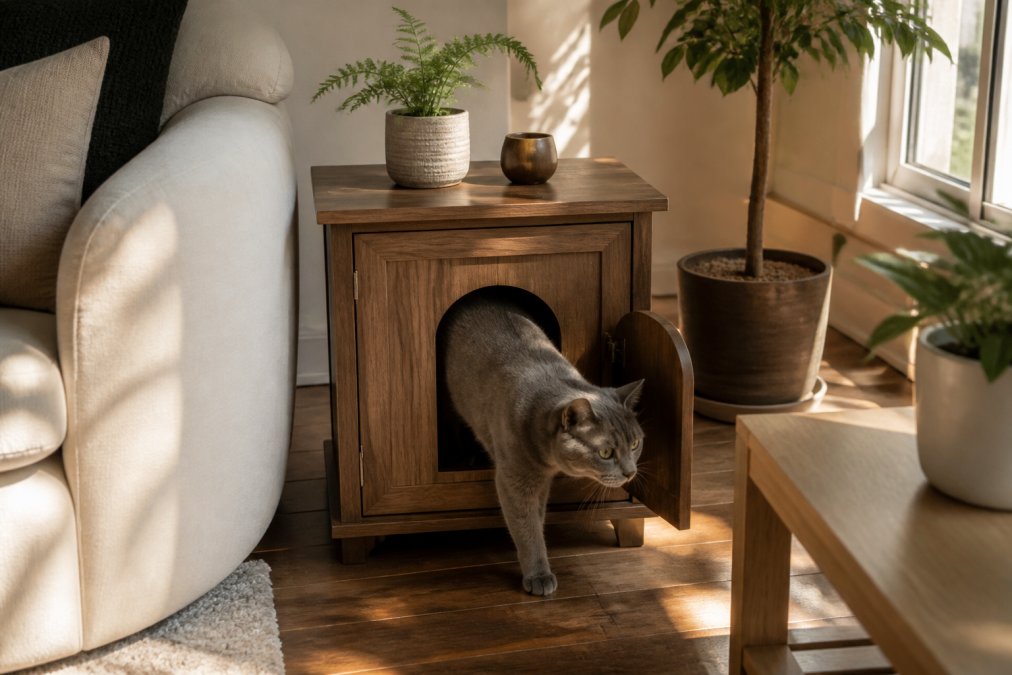
Pros:
- Removes a visible litter box from your living space
- Reduces tracked litter in small rooms
- Blends with standard apartment decor
Cons:
- Occupies the floor space of a side table
- Needs regular ventilation checks in humid rooms
Space-Saving Cat Trees and Vertical Options
Space-saving cat trees trade width for height. A narrow profile tower with a weighted base fits a corner or a gap behind a door, while wall-mounted shelves and window perches use vertical territory your cat would otherwise ignore. Vertical furniture only works when the base is stable enough that your cat trusts it, a wobbly tower gets abandoned no matter how tall it is.
Three options cover most apartments:
- Narrow Profile Cat Tree: multi-level platforms, integrated sisal scratching posts, slim base for corners. Look for a base wider than the top platform and a sisal-wrapped post rather than carpet, sisal sheds less and lasts longer.
- Wall-Mounted Cat Shelves: modular layouts, sturdy brackets, carpeted or wood surfaces for traction. Each shelf should be rated for at least 30 lbs, because the load spikes when a cat lands from a jump.
- Cat Window Perch: suction-cup mounting, supports cats up to 30-40 lbs, washable covers, zero floor footprint. Suction cups hold best on clean, smooth glass; they lose grip on textured or dirty windows and in temperature swings.
How to Lay Out Vertical Space in a Small Room
Think in runs, not single pieces. Cats move in loops, up, across, down, and back. A window perch, two wall shelves, and a narrow tower within jumping distance create a circuit your cat will use all day; gaps longer than about 18 inches break the loop. Keep the highest perch near a wall or corner, since cats prefer elevated spots with a sightline and a wall at their back.
Scratching Surfaces and Wear
Sisal rope and sisal fabric outlast carpet on scratching posts and shed less fiber into a small apartment. Carpet-wrapped posts mat down and trap hair; vacuum carpeted platforms weekly in a studio or one-bedroom. Replaceable posts matter more than a replaceable tower, a bolt-on scratching post can be refreshed for a fraction of the cost of a new unit.
Weight, Anchoring, and Safety
A freestanding tower should be anchored to the wall with the included strap or bracket whenever possible, even a weighted base tips when a cat launches from the top platform. If your lease forbids drilling, use a tension-style anchor or place the tower in a corner where two walls limit its tipping arc.
Cleaning Vertical Furniture in Tight Quarters
Vertical pieces collect dust and hair on every platform, and in a small apartment that buildup is visible fast. Prioritize removable, machine-washable platform covers over fixed carpet; for sisal posts, a lint roller or stiff brush removes embedded hair between deep cleans. A vacuum with a crevice tool reaches the gaps between platforms and the wall, where hair and dander concentrate, do a quick pass weekly and a deeper clean monthly.
Multi-Functional Pet Beds for Tight Floor Plans
Multi-functional pet beds serve a human purpose and a pet purpose in the same footprint. The Pet Bed Ottoman is a clear example: a padded top for seating with an interior cave for a cat or small dog. For a home office, a Desk-Integrated Dog Crate puts a ventilated, latching crate compartment under a standard work surface, though it's heavy and hard to move, so it suits a long-term setup rather than a one-year lease.
| Piece | Starting Price | Hidden Storage | Washable Covers |
|---|---|---|---|
| Pet Bed Ottoman | $120 | No | Yes |
| Desk-Integrated Dog Crate | $350 | Yes | No |
| Home Reserve Laney Sofa | $800 | Yes | Yes |
| Joybird Eliot Sofa | $1,800 | No | No |
| 7th Avenue Modular Sofa | $2,500 | No | Yes |
Rental-Friendly and Senior-Pet Considerations
Rental-friendly installation is the biggest constraint on pet furniture in an apartment, and it comes down to one question: can you undo it without a repair bill?
Damage-Free Mounting Methods
If your lease forbids drilling, you still have options. Ranked from least to most invasive:
- Suction mounting: window perches and some shelves. Holds on clean, smooth glass; fails on textured surfaces and in temperature swings. Check grip monthly.
- Tension mounting: spring-loaded poles that wedge between floor and ceiling, used for some cat trees and shelves. No holes, but they need a solid ceiling and a level floor.
- Adhesive hooks and strips: rated for light loads only. Fine for a small perch or toy hammock, not for a shelf a cat jumps onto.
- Over-the-door brackets: hang a perch or shelf on a door frame with no hardware. Load limits are modest, so keep them low.
- Toggle-bolt wall anchors: the strongest option, but they leave holes. Best saved for a long-term lease with written approval.
Senior Pets Need a Different Geometry
Senior pets need a different calculation. A cat with arthritis won't use a four-foot climbing tower, no matter how clever the design. Lower platforms and ramps help more than height.
For aging cats and dogs, prioritize:
- Low entry points. A bed or crate with a threshold under about 4 inches is easier to step into than one with a tall lip.
- Ramps over stairs. A gentle ramp with a shallow incline is easier on joints than a staircase, which forces a pet to lift each leg.
- Stable, non-slip surfaces. Carpet or rubberized tread on ramps and platforms prevents slips that can worsen joint pain.
- Warmth at floor level. Senior pets often prefer a heated or well-padded bed at ground level over an elevated perch.
Cleaning and Maintenance in Tight Quarters
Cleaning matters more in small quarters: in a studio or one-bedroom, one accident affects the whole room. Removable, machine washable covers and wipeable surfaces are worth paying for.
A practical maintenance rhythm for a small apartment:
- Daily: scoop the litter box and spot-clean accidents while fresh.
- Weekly: vacuum platform covers, crevices, and gaps between furniture and walls.
- Monthly: wash removable covers and wipe hard surfaces, including inside enclosed litter furniture.
- Seasonally: check suction cups, tension poles, and anchors for wear; tighten or replace as needed.
Matching the Piece to Your Lease and Your Pet
The right choice depends on two variables: how long you plan to stay and how mobile your pet is. A renter on a one-year lease with a young, active cat gets the most value from freestanding and suction-mounted vertical pieces. A longer-term renter with a senior pet should invest in low, stable, easy-to-clean pieces that will still work as the pet slows down.
Budget vs. Investment: What to Expect
Budget-friendly pieces include options like window perches, narrow cat trees, and pet bed ottomans. These solve one problem each and are easy to replace.
Conclusion: Choosing the Best Pet Furniture for Small Apartments
The hard part isn't finding pet furniture, it's finding pieces that fit a tight floor plan without making your apartment feel like a pet store. Start with the problem you have right now: a visible litter box, a cat with nowhere to climb, or a crate blocking your hallway.
Frequently Asked Questions
What furniture works best in small apartments with pets?
Multi-functional pieces that serve both humans and pets work best. Look for ottomans with hidden pet beds, litter box enclosures that double as side tables, and wall-mounted cat shelves. These items reduce floor footprint while meeting your pet's needs. Measure your available space first, then choose pieces that fit your layout and your pet's size.
How can I hide pet furniture in a small apartment?
Choose furniture that conceals pet items inside. Hidden litter box furniture looks like a cabinet or end table, keeping litter boxes out of sight. Pet bed ottomans blend with living room decor. For cat trees, pick narrow-profile models in neutral colors that match your existing furniture. This keeps your apartment clutter-free and guest-ready.
What materials are most durable for pet furniture in small spaces?
Performance fabrics resist stains and scratches. Look for machine-washable covers and solid wood frames. For cat trees, sisal-wrapped posts hold up to scratching. Avoid delicate upholstery in tight quarters where pets and people share close contact. Durable materials mean less frequent replacement and better long-term value.
Are there vertical pet furniture options for small apartments?
Yes. Wall-mounted cat shelves and window perches use vertical space without adding floor clutter. Narrow-profile cat trees fit in corners. These options give cats climbing territory and exercise while keeping your floor clear. Check weight capacity and installation requirements before buying, especially if you rent.
How do I choose pet-friendly furniture that fits a small space?
Start by measuring your room and identifying unused vertical areas. Prioritize pieces that serve two purposes, like a desk with a built-in dog crate or a bench with storage. Consider your pet's size and mobility needs. For senior pets, choose low-entry beds and ramps. Always check return policies before buying online.
Every square foot in a small apartment is a decision. The right piece of pet furniture settles two decisions at once, and the wrong one costs you floor space you can't get back. Blanco's Pet Store helps you choose pieces built to support your pet through every stage, from an energetic kitten to a senior dog who needs a gentler setup. Get started with Blanco's Pet Store and give your pet a space that works as hard as your apartment does.