

Best Orthopedic Beds for Senior Dogs 2026

Table of Contents
- Why Senior Dogs Need Orthopedic Beds in 2026
- Signs of Arthritis in Senior Dogs That Signal a Bed Upgrade
- What to Look For in an Orthopedic Bed for Senior Dogs
- The 5 Best Orthopedic Beds for Senior Dogs
- Quick Comparison of Top Picks
- Dog Bed Maintenance and Cleaning Tips for Longevity
- Which Orthopedic Bed Should You Choose?
- Frequently Asked Questions
Last Updated: September 9, 2026
Watching a senior dog struggle to stand up from a flat, thin bed is one of the clearest signs that their comfort needs have changed. As dogs age, their joints lose the cushioning that once made any surface feel fine, and the right support becomes as important as their food or medication (akc.org). Choosing among the best orthopedic beds for senior dogs 2026 has to offer means understanding foam density, accessibility, and how your dog actually sleeps. This guide breaks down exactly what to look for and which models deliver real therapeutic value.
The difference between a generic cushion and a true orthopedic bed comes down to one thing: whether the foam supports your dog's weight without collapsing. A bed that bottoms out leaves your dog lying on the floor through a thin layer of fabric, which does nothing for joint pain. Below, we'll walk through the signs that your dog needs an upgrade, the five beds that earned our recommendation for 2026, and how to keep them clean and supportive for years.
Why Senior Dogs Need Orthopedic Beds in 2026
Orthopedic beds for senior dogs are not a luxury; they are a practical tool for managing age-related joint discomfort. As dogs enter their senior years, the cartilage that cushions their joints wears down, making pressure points on hard surfaces painful. A high-density memory foam bed distributes your dog's weight evenly across the surface, which reduces stress on the hips, elbows, and spine while they rest.
The concept is simple: firm, supportive foam keeps the spine in a neutral position, similar to how a quality mattress supports human sleepers. Many pet owners notice their senior dog sleeping more soundly and rising more easily within days of switching to a proper orthopedic bed. For dogs with arthritis or hip dysplasia, the consistent support can also reduce the stiffness they feel after a long nap, which matters for their overall mobility and quality of life. Veterinary guidance on managing arthritis in dogs frequently includes providing a supportive, padded sleeping surface as part of a broader care plan American Kennel Club guidance on arthritis in dogs.
Signs of Arthritis in Senior Dogs That Signal a Bed Upgrade
If your dog hesitates before jumping onto the couch, walks stiffly after resting, or seems sore when touched along the back or legs, those are common signs of arthritis in senior dogs. Arthritis is a progressive condition where joint cartilage deteriorates, leading to inflammation and pain. Beyond limping, subtle changes like reduced activity, irritability when handled, or a change in sleeping position can all point to joint discomfort that a better bed can help address.
A dog that used to sprawl out may now curl into a tight ball, or a dog that loved lying on tile may start seeking out rugs and carpets. These behaviors suggest your dog is trying to find a surface that does not aggravate tender joints. When you notice these patterns, upgrading to a bed with thick, supportive foam is one of the most direct ways to provide relief. The goal is to keep your dog comfortable enough to get the deep, restorative sleep that supports their immune system and overall health during their senior years.
What to Look For in an Orthopedic Bed for Senior Dogs
Shopping for the right bed means looking past the surface fabric and focusing on the internal support structure. The best orthopedic beds for senior dogs share several core features: high-density foam that resists compression, a design that supports the dog's full body weight, and materials that are safe and easy to maintain. You should also consider your dog's specific sleeping style, whether they sprawl out flat or prefer to curl up against a supportive edge.
Foam Density and Type
The foam is the heart of any orthopedic bed, and density determines how well it supports your dog. High-density memory foam is the industry standard because it conforms to your dog's body while maintaining enough firmness to prevent bottoming out. Egg-crate foam, by contrast, is less dense and compresses more easily, making it a budget-friendly option that offers less therapeutic support for heavier dogs.
Look for foam thickness as a guide: larger breeds need more foam to keep their bodies from sinking through to the floor. A bed with at least four inches of high-density foam is generally suitable for medium dogs, while large and giant breeds benefit from six to seven inches of support (vcahospitals.com). The firmness level should feel supportive, not soft and squishy, because overly soft foam allows the hips to sink into an unnatural angle, which can worsen joint pain over time.
Size, Accessibility, and Support Features
Choosing the right size means measuring your dog from nose to tail base while they sleep in their preferred position, then adding several inches for comfortable stretching. A bed that is too small forces your dog into an awkward curl, while one that is too large can feel drafty and less secure. For dogs with mobility issues, consider the bed's height from the floor; a low-profile design or a bed with a ramp allows your dog to step in without straining their joints.
Supportive bolsters along the edges serve a dual purpose: they give your dog a place to rest their head and neck, and they provide a sense of security for dogs that like to lean against something while sleeping. Some senior dogs also benefit from a non-slip base, which prevents the bed from sliding on hard floors when they step on or off. Finally, look for a removable, machine-washable cover and a waterproof liner underneath, both of which make accidents far easier to manage.
The 5 Best Orthopedic Beds for Senior Dogs
These five beds stand out for senior dogs in 2026. Each one addresses a specific need, from supporting massive frames to fitting inside a crate for post-surgery recovery.
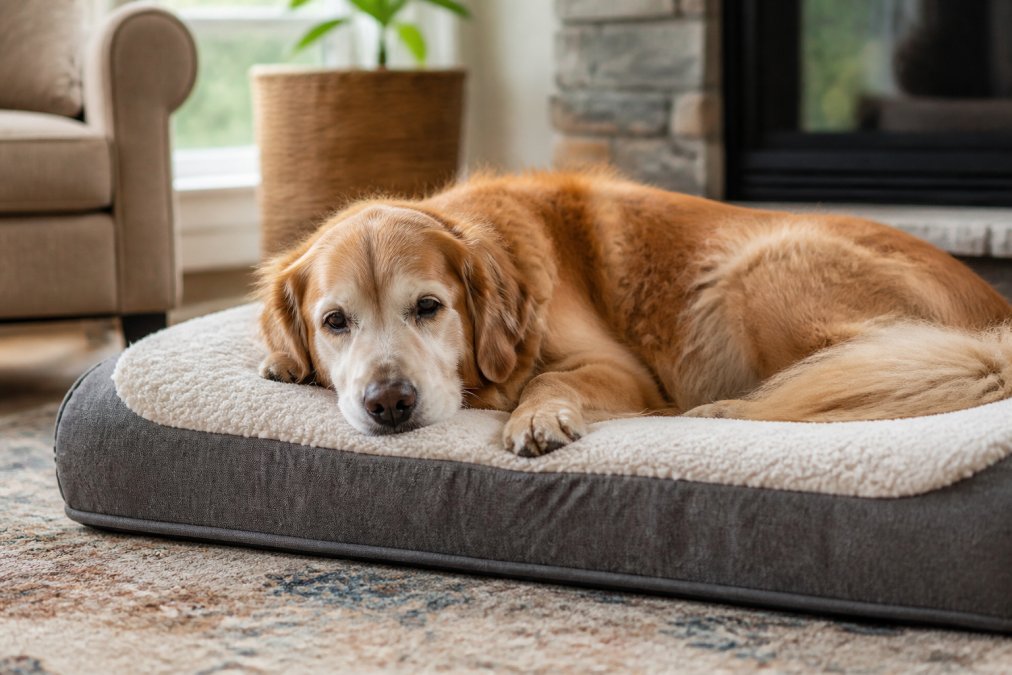
Big Barker Orthopedic Dog Bed: Best for Large Breeds
The Big Barker Orthopedic Dog Bed is engineered for the heaviest dogs, featuring a full seven inches of high-density therapeutic foam. This is the bed to choose when your large or giant breed dog needs serious weight distribution to prevent pressure sores and joint stiffness. The foam is designed specifically to resist bottoming out, which means a 150-pound dog will not compress it to the floor. It is a significant investment, but the construction quality is built to last through years of heavy use, making it a strong choice for owners of breeds prone to hip dysplasia and arthritis.

Le Noof Orthopedic Bed: Best for Mobility Issues
For senior dogs that struggle to climb into high-sided beds, the Le Noof Orthopedic Bed offers a low-entry design that requires minimal effort to access. The high-density foam core provides firm, consistent support, while the water-resistant inner liner protects the foam from accidents. This bed is particularly well suited for dogs recovering from surgery or managing hip dysplasia, where stepping over a tall edge can be painful or risky. The hypoallergenic materials are a bonus for dogs with sensitive skin, though the size range is more limited than some competitors.

Casper The Dog Bed: Best for Pressure Relief
Casper brings its human mattress engineering to the dog bed category, using pressure-relieving memory foam that cradles sensitive joints. The durable, tear-resistant cover holds up well to claws, and the supportive bolsters give senior dogs a place to rest their head without straining their neck. This bed is an excellent pick for dogs that sleep on their side and need extra cushioning around their shoulders and hips. The one drawback is that the bolsters are quite firm, which some dogs may find less inviting if they prefer a softer edge to lean into.

Bedsure Supportive Dog Couch: Best Budget Pick
The Bedsure Supportive Dog Couch delivers solid orthopedic benefits without the premium price tag. Its bolstered sides provide head and neck support, and the egg-crate foam base offers a moderate level of cushioning that suits smaller and medium senior dogs well. The removable, machine-washable cover makes maintenance simple, and the low-profile entry is easy for older dogs to navigate. While the foam density is lower than medical-grade options, this bed is a smart choice for pet parents who want a meaningful upgrade from a flat cushion without a major financial commitment.

Big Barker OrthoLift Crate Bed: Best for Crate Rest
Dogs recovering from surgery or those who need to be confined for medical reasons still require orthopedic support, and the Big Barker OrthoLift Crate Bed delivers it in a crate-friendly format. This pad fits standard crate dimensions and provides the same high-density foam support as the full-size Big Barker bed, which is critical for preventing pressure sores during extended rest. The durable, easy-to-clean fabric stands up to accidents and frequent washing. It is not designed as a standalone primary bed for most dogs, but for crate rest and travel, it is the best option available.
Quick Comparison of Top Picks
| Bed | Best For | Key Support Feature | Notable Limitation |
|---|---|---|---|
| Big Barker Orthopedic | Large and giant breeds | 7-inch therapeutic foam | Higher price point |
| Le Noof Orthopedic | Mobility-impaired dogs | Low-entry design | Limited size range |
| Casper The Dog Bed | Pressure relief | Memory foam with bolsters | Firm bolsters |
| Bedsure Dog Couch | Budget-conscious owners | Egg-crate foam, washable cover | Lower foam density |
| Big Barker OrthoLift | Crate rest and travel | High-density foam pad | Not a primary bed |
Dog Bed Maintenance and Cleaning Tips for Longevity
A quality orthopedic bed is an investment, and proper care will extend its useful life significantly. The most important habit is to wash the removable cover regularly, ideally every two weeks, to prevent oils, dirt, and pet dander from breaking down the fabric fibers. Always check the care label, but most covers can be machine washed on a gentle cycle and air dried to preserve the water-resistant backing.
For the foam core itself, spot cleaning is the safest approach. Foam should never go in a washing machine, as the agitation will break down its cellular structure and ruin its support properties. When accidents happen, remove the cover and clean the foam with a mild soap and water solution, then allow it to dry completely before reassembling the bed. Rotating the bed every few weeks helps the foam wear evenly, and keeping it out of direct sunlight prevents the fabric from fading and becoming brittle. Following these dog bed maintenance and cleaning tips will keep the bed supportive and hygienic for the duration of your dog's senior years.
Which Orthopedic Bed Should You Choose?
The right orthopedic bed for your senior dog depends on their size, mobility level, and where they sleep most often. For large and giant breeds with significant joint issues, the Big Barker Orthopedic Dog Bed is the clear winner because its thick foam prevents bottoming out. If your dog has trouble stepping into a bed, the Le Noof's low-entry design is the most practical choice. For dogs that need crate rest during recovery, the Big Barker OrthoLift pad provides essential support in a confined space.
Before purchasing, measure your dog and consider their sleeping habits honestly. A bed that looks plush in a photo may not offer the firm support an arthritic dog actually needs. Investing in a bed with high-density foam, a waterproof liner, and a washable cover addresses the three biggest challenges of senior dog care: joint pain, incontinence, and cleanliness.
Caring for a senior dog means adapting your home to their changing body, and the right sleeping surface is one of the most effective changes you can make. Finding a bed that balances firm support with genuine comfort can be a challenge, which is why Blanco's Pet Store curates products designed for pets at every stage of their journey. We focus on high-quality materials and thoughtful construction so your dog can rest peacefully, and we make it easy to find the right fit for your home and your pet's needs. Shop our selection of orthopedic beds and give your senior companion the comfortable, supported rest they have earned.
Frequently Asked Questions
What features should I look for in an orthopedic bed for a senior dog?
Focus on high-density memory foam (at least 3 inches thick for medium dogs, more for larger breeds) that won't bottom out. Look for a supportive bolster for head and neck rest, a waterproof liner to manage accidents, and a removable, machine-washable cover. A non-slip base helps dogs with mobility issues get in and out safely. Prioritize beds with a low-profile entry for easy access.
Is memory foam better than egg-crate foam for senior dogs?
Yes. High-density memory foam conforms to your dog's body, distributing weight evenly and relieving pressure on arthritic joints. Egg-crate foam is less dense and can compress over time, offering less support. For senior dogs with joint pain or arthritis, a bed with high-density therapeutic foam provides the firm support needed to prevent painful pressure points.
How do I know if my senior dog needs an orthopedic bed?
Watch for signs of arthritis in senior dogs, such as stiffness after waking, reluctance to climb stairs or jump on furniture, limping, or visible discomfort when lying down. If your dog sleeps more, has trouble getting comfortable, or shows a decreased interest in play, a supportive orthopedic bed can ease joint pain and improve sleep quality.
Are orthopedic dog beds worth the investment for aging pets?
For most senior dogs, yes. The high-density foam provides consistent joint support and pressure relief that standard beds can't match. This can lead to better sleep, less stiffness in the morning, and improved mobility. While the upfront cost is higher, quality beds with durable covers and foam that resists sagging often last longer than cheaper alternatives, making them a practical investment for your dog's comfort.
How often should I replace my senior dog's orthopedic bed?
Most orthopedic beds should be replaced every 2 to 3 years, but this depends on your dog's weight and the bed's quality. If you notice the foam has lost its shape, shows a permanent indentation where your dog sleeps, or you can feel the bottom of the bed through the foam, it's time for a new one. Regularly following dog bed maintenance and cleaning tips, like washing the cover, can extend its life.