

Best High-Quality Pet Mobility Aids: 2026 Guide

Table of Contents
- Quick Comparison: Top Pet Mobility Aids
- Dog Wheelchairs: When and Why They Work
- How to Measure a Dog for a Mobility Harness
- Pet Ramps for Cars and Sofas: Safe Access Solutions
- Lifting Harnesses and Support Slings for Daily Assistance
- Signs of Arthritis in Senior Cats: When Mobility Aids Help
- Traction Control and Home Modifications for Slippery Floors
- Frequently Asked Questions
Last Updated: September 19, 2026
Quick Comparison: Top Pet Mobility Aids
When a senior dog struggles to climb stairs or a cat limps across hardwood floors, pet mobility aids transform their quality of life. The right equipment reduces pain, restores independence, and lets your pet move with confidence again. Blanco's Pet Store offers a carefully curated selection of pet essentials, ranging from everyday necessities and engaging toys to specialized care products.
The challenge is knowing which mobility aid actually works for your pet's specific situation.
The best mobility aids address the root problem (hind-end weakness, joint pain, or neurological impairment) and combine adjustability, comfort, and durability.
| Product Type | Starting Price | Best For | Key Advantage |
|---|---|---|---|
| Dog Wheelchairs | $85-$350 | Hind-limb paralysis, severe mobility loss | Restores independent movement |
| Lifting Harnesses | $60-$110 | Stairs, vehicles, daily assistance | Owner-assisted support |
| Pet Ramps | $90-$100 | Joint pain, arthritis, furniture access | Gradual incline reduces strain |
| Support Slings | $60-$80 | Post-surgical recovery, temporary support | Lightweight, easy to use |
| Traction Pads | $30 | Slippery floors, balance issues | Non-invasive, affordable |
Dog Wheelchairs: When and Why They Work
A dog wheelchair restores independence for dogs with hind-limb paralysis, degenerative myelopathy, or severe arthritis. It bypasses damaged joints or nerves, allowing independent movement while supporting their weight.
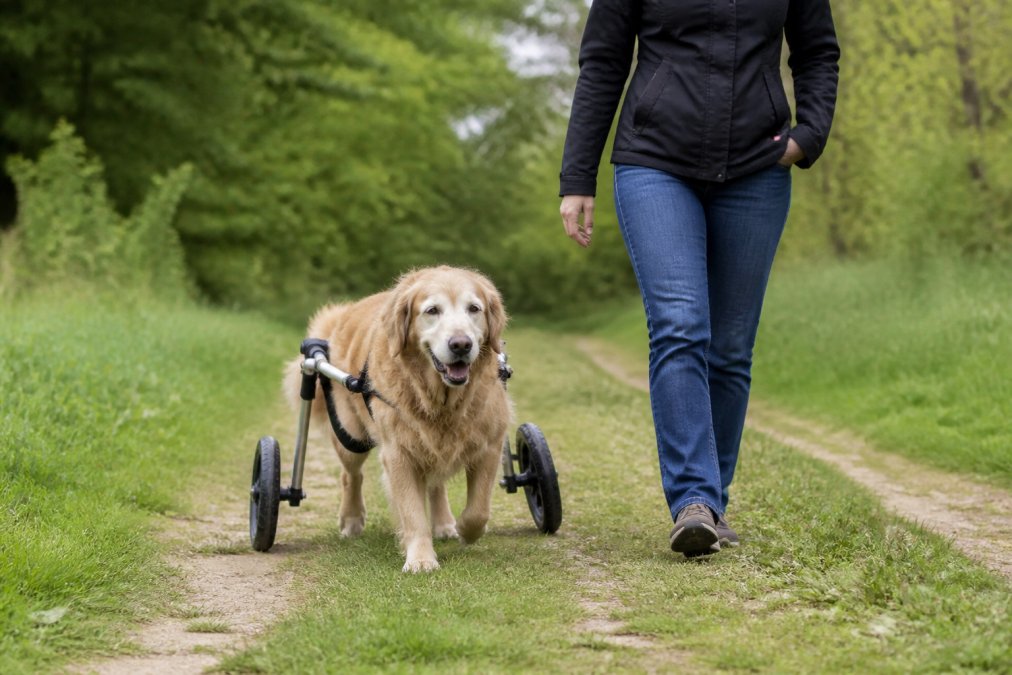
The Walkin' Wheels Dog Wheelchair is veterinarian-approved, fully adjustable, and works for small to large breeds. Assembly takes under 30 minutes.
K9 Carts Dog Wheelchair, designed by veterinary orthopedic surgeons, supports natural gait and posture alignment for long-term spinal health.
The VEVOR Dog Wheelchair is adjustable and lightweight for dogs with limited hind-leg function, though with less customization than premium brands.
The Best Friend Mobility All-Terrain Wheelchair features all-terrain wheels for outdoor use but is bulkier indoors.
How to Measure a Dog for a Mobility Harness
A poorly fitted harness causes chafing and restricts movement. Correct measurement takes five minutes and prevents returns and safety issues.
Taking the Three Core Measurements
With your dog standing on all four legs, measure: (1) chest circumference just behind the front legs, (2) body length from neck to tail base, and (3) abdomen circumference midway between chest and rear legs.
Cross-reference measurements against the product's sizing chart. A harness that's too tight restricts breathing; one that's too loose offers no support and risks slipping during critical moments.
The Fit-Test Protocol
Once your harness arrives, slide two fingers under the chest strap and hip openings. You should feel snug contact without pinching. If you can fit more than two fingers, the harness is too loose.
Walk your dog for 5-10 minutes in the harness. Watch for discomfort signs: excessive scratching, reluctance to move, or attempts to slip out. Genuine distress (yelping, freezing, backing away) signals improper fit; remove immediately and reassess sizing.
Adjustment and Acclimation
Make small adjustments to chest straps, belly bands, and leg loops to distribute pressure evenly across the chest and hindquarters.
Introduce gradually: day one (10 minutes stationary with treats), day two (5-minute walk without lifting), day three (one assisted transition). This reduces anxiety and builds confidence.
Never force a harness on a panicked dog. Associate it with positive experiences (treats, praise, short outings). Most dogs acclimate within 3-7 days.
Common Fitting Mistakes
Avoid: (1) fastening straps too tightly (restricts breathing, causes rib bruising), (2) ignoring weight distribution (front-only support won't help hindquarters), (3) skipping acclimation (causes anxiety), (4) failing to re-measure as your dog ages.
Proper measurement and fit testing prevent frustration, expense, and safety risks. A well-fitted harness lets your dog move with confidence.
Pet Ramps for Cars and Sofas: Safe Access Solutions
Pet ramps eliminate impact and allow dogs to access vehicles, sofas, and beds without strain, especially valuable for senior dogs with hip dysplasia or degenerative disc disease.
The PetSafe Solvit Pet Ramp features a non-slip surface, folds for storage, and handles large breeds. Many arthritic dogs use it immediately, though some need a few days to adjust.
Pet ramps distribute weight gradually across the incline rather than concentrating impact on joints. A typical 40-48 inch ramp provides a gentle slope.
Over months, dogs using ramps consistently show improved mobility: they climb stairs more confidently, move freely, and experience less stiffness. This slows joint degeneration in early-stage arthritis.
Commercial ramps offer superior traction and durability. The non-slip surface is critical; a slippery ramp can cause falls.
Lifting Harnesses and Support Slings for Daily Assistance
Many dogs benefit from a lifting harness for stairs, vehicles, or standing up. These harnesses distribute weight across your hands, reducing strain on joints and your back.
The Help 'Em Up Harness uses a dual-handle system for balanced lifting with padded chest and hip support. Machine-washable material simplifies cleaning.
The GingerLead Dog Support Harness integrates a leash and sling system, ideal for post-surgical recovery or spinal injuries. It's designed for short-term use, not daily independent mobility.
A harness requires owner participation; a wheelchair restores independence. Choose a harness if your dog bears weight but struggles with transitions; choose a wheelchair for little to no rear-leg function.
Signs of Arthritis in Senior Cats: When Mobility Aids Help
Cats hide pain until arthritis is advanced. Early detection requires attention to subtle behavioral shifts, not just physical signs.
Early Warning Signs: The First 6-12 Months
Watch for: (1) reluctance to jump to high perches, (2) increased resting time and reduced exploration, (3) stiffness after rest, (4) limping or favoring a rear leg, (5) difficulty using the litter box.
Keep a log of activities your cat avoids or performs differently.
Progressive Symptoms: Moderate to Advanced Arthritis
The Psychological Impact of Mobility Loss
Environmental Modifications vs. Mobility Aids: A Decision Framework
For early-stage arthritis (mild stiffness, occasional limping):
- Install ramps or steps leading to favorite perches (window seats, cat trees). Ramps should have a gentle slope (no steeper than 30 degrees) and non-slip surfaces.
- Provide lower litter boxes or add a step stool beside standard boxes.
- Place food and water bowls at chest height to reduce bending.
- Use orthopedic bedding in favorite resting spots, memory foam or heated beds reduce joint stiffness.
- Consider a cat tree with multiple levels spaced closer together, allowing your cat to climb gradually rather than jump.
For moderate arthritis (noticeable limping, reluctance to jump, muscle loss):
- Combine environmental modifications with pain management (consult your veterinarian about supplements like glucosamine or prescription pain relief).
- Increase the number of resting spots throughout your home, cats shouldn't have to travel far to rest.
- Install window perches at accessible heights so your cat can still enjoy their favorite views.
- Use heated beds; warmth reduces stiffness and encourages movement.
- Consider a harness for short, supervised sessions if your cat shows interest in outdoor time but struggles with mobility, though most cats will reject this.
For advanced arthritis (severe lameness, significant muscle loss, behavioral withdrawal):
- Prioritize pain management and comfort over mobility aids.
- Create a "comfort zone" on one level of your home with food, water, litter, and bedding all within a few feet.
- Consult your veterinarian about physical therapy (gentle range-of-motion exercises) or acupuncture, both of which some cats tolerate well.
- Mobility harnesses are rarely effective for cats at this stage; focus instead on quality of life and pain relief.
When to Seek Professional Assessment
Traction Control and Home Modifications for Slippery Floors
Hardwood and tile floors are treacherous for senior pets. Without traction, older dogs and cats slip, lose confidence, and avoid movement. This muscle atrophy accelerates mobility decline.
Frequently Asked Questions
What are the main types of pet mobility aids available?
Pet mobility aids fall into several categories: dog wheelchairs for hind-leg paralysis or severe weakness, lifting harnesses that let owners assist with stairs or vehicle entry, support slings for post-surgical recovery, ramps for safe access to furniture and cars, and traction solutions for slippery floors. The right choice depends on your pet's specific condition, mobility level, and daily needs. Veterinary recommendation is crucial for determining which type suits your pet best.
How do I know if my senior dog needs a mobility aid?
Signs your senior dog may benefit from mobility support include difficulty rising from a lying position, reluctance to climb stairs, dragging hind legs, slipping on hardwood or tile floors, and reluctance to jump into vehicles. Weakness in the rear legs, loss of bladder control, or visible muscle atrophy in the hind quarters are also indicators. Consult your veterinarian to rule out treatable conditions and determine whether orthopedic support, physical therapy, or assistive devices would improve your dog's quality of life and range of motion.
What features should I prioritize when buying a high-quality pet mobility aid?
Look for adjustable straps and frame geometry to ensure proper weight distribution and spinal support. Breathable materials reduce pressure sores during extended use. Non-slip surfaces and secure attachment points prevent injury. Lightweight construction makes handling easier for owners. Veterinary approval and durability matter, quality materials withstand daily use. Consider your pet's size, the specific condition (arthritis, degenerative myelopathy, hip dysplasia), and whether the aid supports independent mobility or requires owner assistance.
Are dog wheelchairs recommended by veterinarians for senior pets?
Yes, veterinary professionals often recommend mobility carts for pets with chronic hind-limb issues, paralysis, or severe arthritis that limits independent movement. Wheelchairs restore quality of life by allowing senior dogs to exercise, socialize, and maintain muscle tone. Veterinary orthopedic surgeons design many premium wheelchairs specifically for proper gait alignment and spinal support. However, the right choice depends on your pet's condition, weight, and activity level. Always consult your vet before purchasing to confirm a wheelchair is appropriate for your pet's needs.